Content Marketing That Converts: The 5 Stage Funnel Framework for B2B
Here is something most marketers quietly know but rarely say out loud: the content is rarely the problem. The blog posts are decent. The case studies look great. The LinkedIn posts go out every week. And yet the leads are not coming in the way they should.
What is missing is not more content. It is a system that connects the content to the actual journey a buyer takes before they decide to work with you.
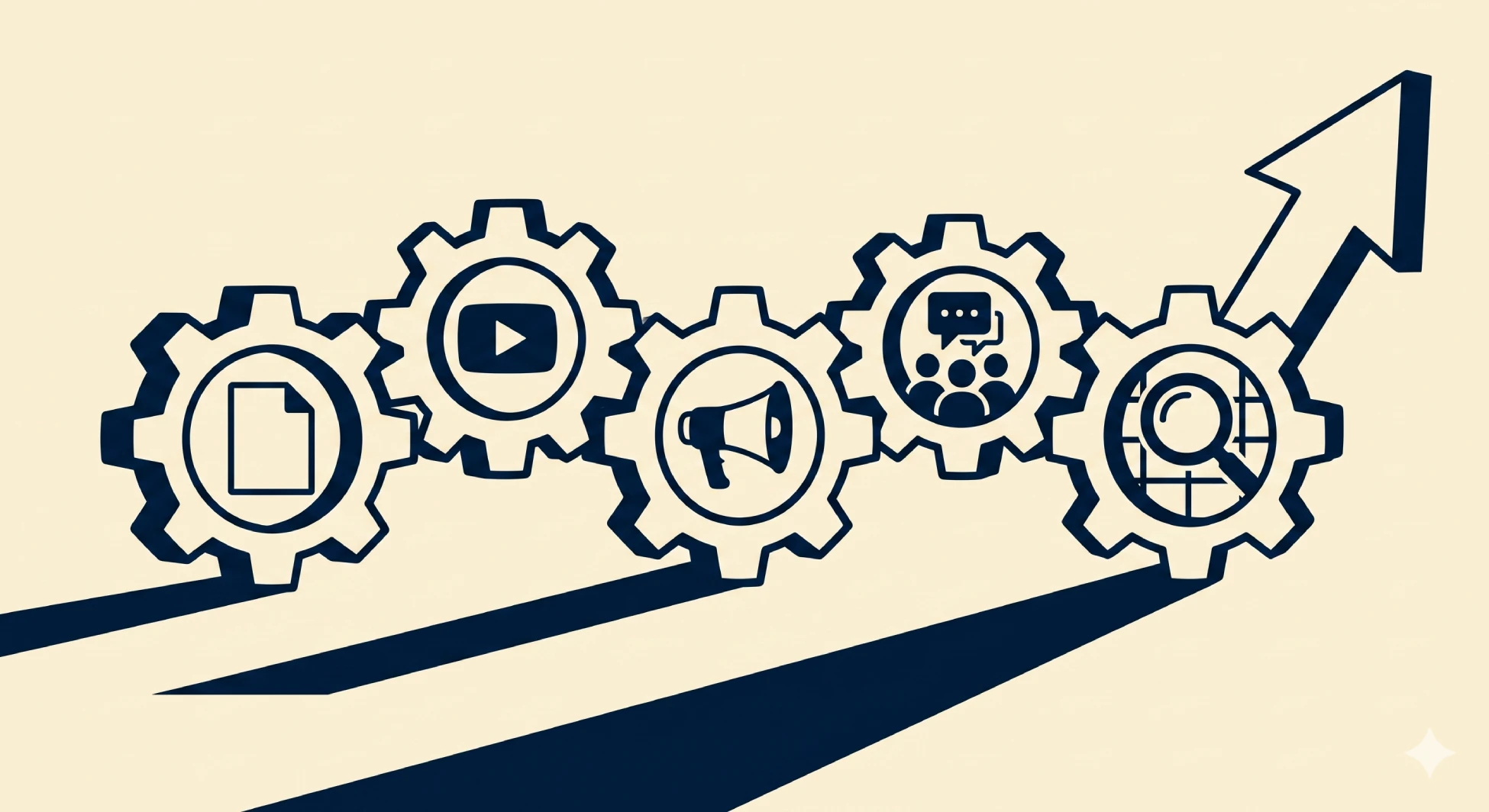
That is what this framework is about. At Futuready, this is how we approach content strategy for B2B brands, not as a content calendar exercise, but as a conversion system with five distinct stages, each with its own job to do.
Before getting into the framework, it is worth naming the real problem. Most B2B brands put the bulk of their content effort into awareness. Blog posts, social content, the occasional video. They are building visibility, which is good. But visibility without a clear path forward is just traffic.
B2B buyers do not wake up one morning and decide to purchase. They research for weeks, sometimes months. They read, compare, ask colleagues, and evaluate multiple options before ever reaching out. If your content only speaks to them at the very beginning of that journey and has nothing to offer them as they get closer to a decision, you are essentially doing your competitors a favour by warming up the audience for them.
The shift from content marketing as a publishing activity to content marketing as a conversion system starts with one question: what does this buyer need to see at each stage, and do we have it?
The 5 Stage B2B Content Funnel
Stage 1: AwarenessBe found before you are needed.
The job of awareness content is not to sell. It is to show up in the right places before your buyer is even thinking about vendors. This means creating content around the questions your ideal customers are already searching for. Industry trends, common problems in your category, educational explainers, research-backed perspectives. The goal is to become a familiar and credible voice before the buying conversation begins.
The number that matters here is not total traffic. It is the right traffic. A thousand impressions from your target buyer profile are worth more than ten thousand from people who will never need what you offer. At Futuready, our content marketing service starts with mapping exactly what your buyers are searching for at this stage so that every piece of awareness content has a genuine shot at being found.
Formats that work here: SEO blog posts, LinkedIn thought leadership, industry reports, short explainer videos, podcast features, infographics.
Stage 2: InterestGive them a reason to stay.
Getting found is one thing. Giving someone a reason to come back is harder, and it is where most B2B content programmes fall short. Interest stage content goes deeper. It rewards the reader who liked your first piece and wants more. Long-form guides, original research, newsletter content, webinar series. Things that take a bit more time to consume but leave the reader genuinely better informed. See how to create engaging content that drives traffic and conversions.
The practical test for this stage is simple: if someone reads your best blog post and then looks for more from you, is there something worth finding? If the answer is no, you have an interest stage gap. Good content architecture makes sure every awareness piece naturally leads somewhere. Not through a clunky CTA, but through relevance. The next article, the deeper guide, the newsletter sign-up that actually feels worth it.
Formats that work here: Long-form guides, original research, email newsletters, webinars, LinkedIn article series, comparison content.
Stage 3: ConsiderationStop explaining. Start proving.
By the time a buyer reaches the consideration stage, they know they have a problem and they are actively looking at options. They are not looking for more information about the category. They are looking for evidence that you specifically can solve their problem.
This is where generic capability content fails completely. "We are a full-service agency with a passion for results" is something every competitor is also saying. It gives the buyer nothing to evaluate.
What works at this stage is specificity. A case study that shows exactly what you did, for whom, and what it produced. A methodology breakdown that explains your thinking process. A project walkthrough that lets a prospect see themselves in your previous work. Content writing for lead generation is one of the most effective tools at this stage.
This is also where your digital strategy content earns its place. When you can articulate not just what you do but how you think, buyers start to trust the process before they have even spoken to you.
Formats that work here: Case studies, methodology explainers, client testimonials, detailed project breakdowns, ROI calculators, comparison guides.
Stage 4: IntentAnswer the question they have not asked yet.
A buyer at the intent stage has mentally shortlisted you. They are close. But there is usually something still holding them back, a question they have not found a clear answer to, a concern the sales call has not resolved yet.
This is the most underserved stage in B2B content. It does not feel glamorous. FAQ pages, process explainers, pricing transparency content, timeline guides. None of it wins awards. But it does win deals.
Think about what your sales team hears most often right before a decision is made. Those are your intent stage content briefs. Every recurring objection is a piece of content waiting to be written. When a prospect can find the answer on your site before they have to ask for it, it removes friction and builds confidence at exactly the right moment. Your service pages do this job when they are built around what a buyer needs to know rather than what you want to say about yourself.
Formats that work here: Detailed service pages, FAQ content, process explainers, live demos, proposal templates, pricing guides.
Stage 5: AdvocacyYour best clients are your best content.
Most content funnels end at the sale. The strongest ones treat the client relationship as the beginning of a new content cycle. Advocacy stage content is what you build with your existing clients, not just for them. Co-authored case studies, client spotlights, testimonial campaigns, referral content. When a happy client puts their name on something that talks about the work you did together, it carries more credibility than anything you could say about yourself.
In B2B, reputation travels fast within industries. A single well-placed advocate in the right network can bring in more qualified leads than months of awareness content. The brands that compound their growth over time are the ones that treat client success as a content asset from day one. When your brand identity is consistent and the work is strong, clients want to talk about it. They share it, reference it in conversations, and recommend it to peers. That is the most powerful distribution channel in B2B, and it starts with doing the work well and then making it easy for clients to talk about it.
Formats that work here: Co-authored case studies, client spotlights, referral programmes, testimonial campaigns, community content, user-generated content.
The Framework in Practice: Razorpay
To see how this funnel plays out in practice, consider Razorpay, one of India's leading B2B payment solutions providers.
Razorpay sells to businesses, not consumers. Their buyers are founders, finance teams, and product managers who research carefully before committing to a payments partner. That makes the content funnel critical at every stage.
At the awareness stage, Razorpay shows up across search with content about payment infrastructure, online transaction management, and working capital. At the interest stage, they go deeper with product explainers and comparison guides that help buyers understand the difference between options.
By the time a buyer reaches consideration, they need more than features. They need proof. This is where Futuready came in. We produced a testimonial video combining animation and live footage that showed exactly how Razorpay's platform works in real business scenarios. The goal was not to explain the product. It was to show it in action through the voice of a real customer, which is the most credible form of consideration stage content available. You can see the work in our Razorpay case study.
The result was content that did the job of a sales conversation without requiring one. Buyers at the shortlisting stage could watch, understand the value, and move forward with confidence. That is exactly what Stage 3 and Stage 5 content is supposed to do.
How to Audit What You Have Right Now
Before creating anything new, take stock of what already exists. Go through every piece of content you have published in the last twelve months and assign it to one of the five stages. You will almost certainly find that the majority sits at Stage 1, a small amount at Stage 2, and very little anywhere else.
That concentration at the top of the funnel is usually the most direct explanation for a common problem: decent traffic, thin pipeline.
Start filling the gaps from the bottom up. Stage 3 and Stage 4 content is closest to conversion and will produce results faster because it speaks to buyers who are already looking for a solution. Once those gaps are filled, you can invest in Stages 1 and 2 with the confidence that the traffic you attract actually has somewhere to go.
If you want help running a proper content audit and mapping out the gaps, our team does this as part of every content strategy engagement. Get in touch to get started.
How to Measure Each Stage
A funnel without measurement is just a theory. Here is what to track at each stage so you know whether the system is actually working.
Stage 1 is about organic reach among your target audience. You want impressions and traffic from the right profile, not just any traffic.
Stage 2 is about depth of engagement. Return visits, newsletter subscribers, time on page, scroll depth. Are people spending time with your content or bouncing after thirty seconds?
Stage 3 is about intent signals. Case study downloads, demo requests, direct enquiries. Are people who consume your content taking the next step?
Stage 4 is about conversion efficiency. Conversion rate and sales cycle length. Is the content reducing the time and friction between interest and decision?
Stage 5 is about compounding returns. Referrals, repeat business, net promoter score. Are clients becoming a source of new business?
When you look at these together, you stop asking "is our content good?" and start asking "where is the system breaking down?" That is a much more useful question.
What This Looks Like When It Works
The brands that get the most out of content marketing are not always the ones publishing the most. They are the ones who are clearest about who they are talking to, what that person needs to hear right now, and what they want them to do next.
That clarity does not come from publishing more. It comes from publishing with intention. Every piece earns its place by serving a specific buyer at a specific stage of their journey. You can see this kind of thinking in action across our work. Different industries, different briefs, but the same underlying question every time: what does this audience need to hear, and when?
Let Us Build Your Content Funnel
If your content is bringing in traffic but not leads, or bringing in leads that do not close, the five stage framework above will show you exactly where the system is leaking.
Futuready builds content strategies for B2B brands that are done publishing into a void. From audience research and funnel mapping through to content creation, distribution, and measurement, we work across the full picture. Learn more about the role of a content marketing agency in modern digital strategy.
Ready to talk? Get in touch.
Commonly asked.
Honestly answered.
It is a framework that organises your content around the stages a buyer goes through before making a decision. Rather than publishing randomly, every piece has a defined role depending on where the reader is in their journey, from first discovering you to deciding to work with you.
Usually because it is all concentrated at the awareness stage. Brands get good at being found but have nothing to offer buyers who are further along and closer to a decision. Without consideration and intent stage content, traffic arrives but never converts.
The content closest to conversion tends to work hardest. Case studies, process explainers, detailed service pages, and FAQ content all address real objections and give decision makers something concrete to evaluate. See how Futuready approaches content for B2B brands.
Awareness stage content typically takes three to six months to rank and gain traction organically. Consideration and intent stage content can move faster because it targets buyers who are already looking. A well-built funnel covers both so you have near-term and long-term returns running in parallel.
Content marketing is the practice. A content funnel is the strategy behind it. You can do content marketing without a funnel, but you will struggle to predict or improve results. The funnel gives every piece of content a purpose and a measurable outcome.
We start with an audit of what exists, map it against the buyer journey, find the gaps, and build a programme that fills them with the right formats at each stage. Our content and strategy teams work together on every engagement so the work is creative and commercial from the start.