How Educational Institutions Can Scale Admissions Using AI Content
Every educational institution wants one thing during the admission season—more qualified student applications. Yet, many colleges and universities continue to rely on the same marketing playbook they used years ago: newspaper advertisements, admission fairs, generic brochures, repetitive social media posts, and campaign-heavy promotions.
While these tactics still have a role to play, they are no longer enough to influence today's digitally connected students.
Modern students don't make admission decisions after seeing a single advertisement. They research extensively before filling out an enquiry form. They compare colleges on Google, watch campus videos on YouTube, explore Instagram, read student reviews, visit multiple websites, attend webinars, and even ask AI platforms like ChatGPT and Gemini for recommendations.
By the time a prospective student contacts your admission team, they may have already interacted with your institution across ten or more digital touchpoints.
This shift has fundamentally changed admission marketing.
The challenge isn't simply generating more leads anymore—it's creating enough valuable, relevant, and trustworthy content to influence students throughout their decision-making journey.
Unfortunately, many educational institutions struggle to meet this growing demand. Marketing teams are expected to promote dozens of academic programs, manage multiple campuses, create content for social media, maintain websites, optimise for search engines, respond to student queries, and support admission campaigns—all with limited resources.
This is where AI content for educational institutions is becoming a game changer.
AI isn't replacing admission counsellors or marketing professionals. Instead, it enables institutions to produce better content faster, personalise communication at scale, improve search visibility, and build stronger relationships with prospective students before the first counselling call even happens.
The institutions that embrace AI strategically won't simply publish more content. They'll create more meaningful student experiences, strengthen trust, and scale admissions more efficiently in an increasingly competitive education landscape.
Why Student Admissions Have Become More Competitive Than Ever
Higher education has become one of the most competitive industries in digital marketing.
Students today have access to thousands of institutions offering similar programs, competitive fee structures, scholarships, online learning options, and placement promises.
This abundance of choice has shifted power from institutions to students.
Instead of waiting for admission brochures, students actively research colleges online. They compare rankings, curriculum, faculty expertise, industry partnerships, internship opportunities, alumni success, campus life, placement records, and student testimonials before making a shortlist.
Their journey often begins months before they submit an application.
This means educational institutions must remain visible throughout that entire research process.
Visibility no longer depends only on paid advertisements.
It depends on consistently publishing content that answers student questions, builds credibility, and demonstrates expertise.
Institutions that educate prospective students before asking them to apply are increasingly becoming the institutions students trust most.
The Modern Student Journey Has Changed
Today's admission journey rarely follows a straight line.
A prospective student may first discover your institution through a Google search while researching career options.
Later, they might watch your campus tour on YouTube.
A few days later, they see one of your Instagram reels.
They then read your blog explaining career opportunities after graduation.
Next, they compare your course curriculum with competing institutions.
Finally, after reading student success stories and placement information, they complete an enquiry form.
Every one of these interactions influences their perception of your institution.
Each touchpoint either builds confidence or creates uncertainty.
Unfortunately, many colleges invest heavily in generating enquiries while overlooking the content that helps students make confident decisions.
Without valuable content supporting every stage of the student journey, even the best advertising campaigns struggle to achieve sustainable admission growth.
The Content Gap Holding Back Educational Institutions
Ask most admission teams about their marketing priorities, and you'll hear familiar responses:
"We need more enquiries."
"We need lower cost per lead."
"We need better conversion rates."
While these objectives are important, they often overlook the underlying issue.
Many institutions simply don't produce enough useful content.
Consider the number of questions prospective students ask before choosing a college:
- Which course should I choose?
- What careers are available after graduation?
- What companies visit for placements?
- How does this program compare with others?
- What scholarships are available?
- What is campus life like?
- What skills will I learn?
- Is this college recognized?
- What does the admission process involve?
- What makes this institution different?
Every unanswered question creates an opportunity for another institution to earn the student's trust.
This is where Education Content Marketing becomes one of the most powerful admission tools available.
Instead of relying solely on promotional campaigns, institutions can create content that informs, guides, and supports prospective students throughout their decision-making process.
When done consistently, content becomes an extension of the admission counselling team.
What AI Content Really Means for Educational Institutions
Many people assume AI content simply means asking an AI tool to write blogs.
The reality is far more sophisticated.
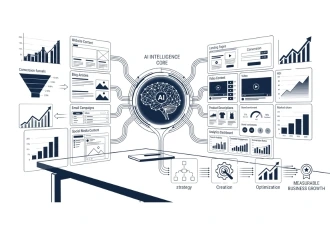
Professional AI Content Marketing for Colleges combines artificial intelligence with institutional expertise, SEO strategy, student psychology, and editorial oversight to create content that supports measurable admission goals.
AI helps accelerate repetitive tasks such as research, outlining, first drafts, content repurposing, and optimisation.
Marketing professionals then refine this output using their understanding of student behaviour, institutional strengths, academic positioning, and brand voice.
The result is content that is both scalable and meaningful.
Educational institutions can use AI to create:
- Course pages
- Program brochures
- SEO blogs
- Faculty interviews
- Student success stories
- Placement articles
- Career guides
- Admission FAQs
- Scholarship information
- Landing pages
- Email campaigns
- Social media content
- Video scripts
- Webinar content
- Alumni stories
- Event promotions
Instead of spending weeks creating each asset individually, AI enables marketing teams to focus more time on strategy, creativity, and student engagement.
Why AI Doesn't Replace Human Storytelling
Education is one of the most emotional purchasing decisions a family makes.
Students aren't simply buying a degree.
They're investing in their future career, personal growth, financial security, and aspirations.
This emotional dimension cannot be automated.
AI can organise information, generate ideas, and accelerate production.
But only experienced educators, marketers, faculty members, alumni, and students can share authentic stories that inspire confidence.
A placement success story carries weight because it reflects real outcomes.
A faculty interview builds trust because it demonstrates expertise.
A student testimonial resonates because it captures lived experience.
The most effective institutions use AI to improve efficiency while allowing humans to provide authenticity.
That balance is where meaningful admission marketing begins.
The Futuready AI Admissions Content Framework
One of the biggest mistakes institutions make is producing content without connecting it to the student journey.
At Futuready, content should function as a connected admission ecosystem rather than isolated marketing activities.
Discover
Understand what prospective students are searching for before selecting an institution.
Educate
Create blogs, videos, career guides, FAQs, and course content that answer those questions.
Build Trust
Showcase faculty expertise, accreditation, placement records, industry collaborations, alumni achievements, and student experiences.
Engage
Use personalised email campaigns, social media content, webinars, and AI-assisted nurturing to keep prospective students connected.
Convert
Guide interested students toward enquiry forms, counselling sessions, campus visits, entrance exams, and ultimately enrolment.
Rather than treating admissions as a single campaign, this framework creates a continuous conversation with students from awareness to admission.
Content Is Becoming the New Admission Counsellor
The best admission teams understand that students often begin evaluating an institution long before speaking to a counsellor.
By the time that first conversation happens, students have already formed opinions based on your website, blog, videos, social media presence, and search visibility.
This makes content one of the most influential admission tools available today.
Institutions that consistently publish valuable educational content position themselves as trusted advisors rather than simply another college competing for applications.
In many cases, content answers student questions before an admission executive ever receives an enquiry.
That creates warmer leads, shorter decision cycles, and more informed conversations.
AI Content Across Every Stage of the Student Admission Journey
Successful admission marketing is no longer about generating as many enquiries as possible. It's about guiding prospective students through a journey that builds confidence, answers questions, and gradually moves them toward enrolment.
This is where AI content becomes significantly more valuable than simply creating blogs or social media posts.
When implemented strategically, AI can support every stage of the admission funnel.
Stage 1: Awareness
At the beginning of their journey, students are rarely searching for a specific institution. Instead, they're asking broader questions about careers, courses, industries, and future opportunities.
Typical searches include:
- Which career has the best scope after Class 12?
- Is BBA a good career option?
- MBA vs PGDM – Which is better?
- Career opportunities after Computer Engineering
- Best colleges for Architecture
Creating high-quality educational content around these topics helps institutions attract students long before they begin comparing colleges.
Rather than selling immediately, institutions should focus on becoming a trusted source of information.
Stage 2: Consideration
Once students shortlist a few colleges, their search behaviour becomes more specific.
They begin evaluating:
- Course curriculum
- Faculty expertise
- Placement statistics
- Campus infrastructure
- Student clubs
- Industry collaborations
- Rankings
- Accreditation
- Scholarships
- Alumni success
This is where AI-assisted content can help institutions quickly produce:
- Detailed course pages
- Department-specific blogs
- Faculty interviews
- Placement success stories
- Industry partnership highlights
- Student testimonials
- Virtual campus tour scripts
Every content asset should answer a student's next question before they need to ask it.
Stage 3: Decision
This is where many institutions lose prospective students.
The student already knows about the institution but still has unanswered concerns.
Questions become highly practical.
- Is the admission process complicated?
- How much financial assistance is available?
- What documents are required?
- When does counselling begin?
- How are hostel facilities?
- Can parents visit the campus?
- What is student life actually like?
AI enables marketing teams to rapidly produce:
- Admission guides
- Step-by-step application pages
- FAQ sections
- Email nurturing sequences
- WhatsApp content
- Webinar scripts
- Counselling preparation resources
Reducing uncertainty often has a greater impact on admissions than increasing advertising spend.
Stage 4: Advocacy
The admission journey doesn't end once students enrol.
Satisfied students become your strongest marketing asset.
AI can assist institutions in creating:
- Student achievement stories
- Alumni interviews
- Placement announcements
- Internship success stories
- Event coverage
- Research highlights
- Faculty accomplishments
These stories influence the next generation of applicants while strengthening institutional credibility.
The Types of AI Content That Generate Admissions
Many colleges focus almost exclusively on promotional campaigns.
The institutions achieving stronger organic growth are building complete content ecosystems.
Some of the highest-performing content formats include:
Career Guidance Blogs
Students often begin their research by exploring career options rather than institutions.
Publishing career-focused content positions the institution early in the decision-making process.
Course Landing Pages
Instead of listing subjects, explain:
- Career outcomes
- Industry demand
- Skills developed
- Salary expectations
- Future opportunities
Students want to understand where the course can take them.
Faculty Stories
Faculty profiles shouldn't resemble résumés.
Students connect more with stories about research, industry experience, teaching philosophy, innovation, and mentorship.
Student Success Stories
Nothing builds trust faster than hearing directly from successful graduates.
Placement stories, entrepreneurial journeys, international opportunities, and research achievements create powerful social proof.
Parent-Focused Content
Parents influence many admission decisions.
Content addressing affordability, safety, placements, academic quality, and career prospects helps reduce their concerns.
Video Content
AI can significantly accelerate script creation for:
- Campus tours
- Program explainers
- Student interviews
- Faculty discussions
- Event highlights
- Placement success videos
Video remains one of the most influential content formats in education marketing.
Common AI Content Mistakes Educational Institutions Should Avoid
Although AI offers tremendous opportunities, many institutions fail to realise its full potential because they treat it as a shortcut rather than a strategic tool.
Some of the most common mistakes include:
Publishing Generic Content
Students can easily recognize content that lacks depth or originality.
Every institution has unique strengths. AI should amplify those strengths—not replace them with generic information.
Ignoring SEO
Excellent content has little value if students cannot discover it.
Institutions should combine AI with keyword research, semantic SEO, internal linking, and topical authority strategies.
Sounding Robotic
Admissions are emotional.
Every piece of content should sound helpful, conversational, and human.
Focusing Only on Admissions
The best education marketing builds long-term trust.
Publishing only admission announcements creates little value.
Students engage more with educational content than promotional content.
Not Measuring Performance
AI allows institutions to create content faster.
Analytics tells them which content actually influences admissions.
Successful teams continuously optimize based on search visibility, engagement, enquiries, and conversion rates.
Futuready Insight
The institutions seeing the highest admission growth aren't necessarily spending the most on advertising—they're creating the most helpful content. Every blog, video, student story, and faculty insight becomes another opportunity to earn trust before the first counselling call takes place.
AI, SEO, GEO & AEO: The Future of Education Marketing
Student search behaviour is evolving rapidly.
Traditional search engines are no longer the only source of information.
Students increasingly ask conversational questions through AI-powered platforms before visiting institutional websites.
Instead of searching only for:
"Top MBA Colleges in Mumbai"
Students now ask:
"Which MBA college has the best placements for marketing?"
or
"What should I consider before choosing an engineering college?"
To remain visible in this environment, educational institutions need content that goes beyond keywords.
Modern education content should:
- Answer complete questions.
- Demonstrate expertise.
- Provide unique perspectives.
- Cover topics comprehensively.
- Build topical authority.
- Connect related content through internal linking.
- Include FAQs that reflect real student concerns.
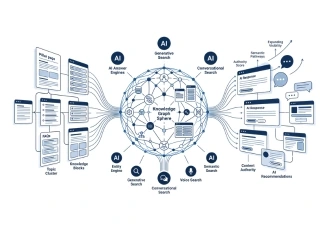
Institutions investing in SEO, Generative Engine Optimisation (GEO), and Answer Engine Optimisation (AEO) today will be better positioned as AI-powered search continues to grow.
The Future of Student Admissions Is Content-Led
Technology will continue to reshape higher education marketing.
Artificial intelligence will make content production faster.
Search engines will become increasingly conversational.
Students will expect personalised experiences.
However, one principle will remain constant.
Students choose institutions they trust.
Trust isn't built through advertisements alone.
It's built through consistent, valuable, authentic content that demonstrates expertise, answers questions, reduces uncertainty, and helps students make informed decisions.
AI enables institutions to create more of that content without proportionally increasing resources.
The institutions that succeed over the next decade won't simply be those with larger marketing budgets. They'll be those that combine AI with strategic thinking, experienced educators, compelling storytelling, and a student-first mindset.
Admissions don't scale because institutions publish more promotional content.
They scale because institutions become trusted sources of knowledge long before a student fills out an application form.
Final Thoughts
The future of admission marketing isn't about replacing people with artificial intelligence—it's about empowering education marketing teams to create meaningful experiences at scale.
AI Content for Educational Institutions allows colleges and universities to move beyond fragmented campaigns and build connected content ecosystems that support every stage of the student journey.
From career guidance blogs and course pages to faculty stories, placement success, email nurturing, and AI-powered search optimization, every piece of content has the potential to influence a student's decision.
The institutions that invest today in strategic, AI-assisted content marketing will be better equipped to attract qualified students, strengthen their digital presence, and build lasting relationships with future learners.
Because in higher education, the institutions that educate prospective students first are often the ones they ultimately choose.
Commonly asked.
Honestly answered.
AI enables institutions to produce high-quality blogs, course pages, student stories, social media content, and email campaigns faster while supporting SEO, student engagement, and lead nurturing throughout the admission journey.
Yes. When combined with human expertise, AI helps educational institutions scale content production while maintaining accuracy, brand consistency, and relevance for prospective students.
Institutions can use AI for career guidance articles, course descriptions, faculty interviews, placement stories, student testimonials, admission FAQs, landing pages, email campaigns, and video scripts.
No. AI accelerates research, drafting, and optimisation, but marketing professionals remain essential for strategy, storytelling, student psychology, compliance, and institutional branding.
Yes. AI-assisted content combined with keyword research, topical authority, internal linking, and human editing can significantly improve search visibility and attract prospective students organically.
AI helps institutions answer student questions earlier in the decision-making process, personalise communication, improve content consistency, and create more opportunities for engagement before counselling begins.
The biggest advantage is scalability. Institutions can produce more valuable content across multiple channels without proportionally increasing marketing resources, helping them reach more prospective students efficiently.
They should create comprehensive, experience-driven content that answers real student questions, demonstrates expertise, supports SEO, GEO, and AEO, and connects related topics into a strong content ecosystem.