Complete Guide to Hiring the Right Digital Marketing Agency for Business Growth
Choosing a marketing partner has never been more important—or more difficult.
Today, almost every business understands the value of having an online presence. Whether the goal is generating leads, increasing sales, improving brand awareness, or expanding into new markets, digital channels have become central to business growth.
At the same time, the number of agencies offering similar promises has grown rapidly.
Some guarantee first-page rankings.
Others promise viral social media campaigns.
Many advertise instant lead generation or dramatic revenue growth.
For a business owner evaluating these options, the challenge isn't understanding the importance of digital marketing.
The challenge is knowing who to trust.
Selecting the wrong partner can lead to wasted budgets, inconsistent branding, poor-quality leads, and months of missed opportunities.
Choosing the right Digital Marketing Agency, however, creates something much more valuable than marketing campaigns.
It creates a long-term growth partner that understands your business, adapts to changing markets, and helps build sustainable competitive advantage.
This guide explains what businesses should evaluate before hiring an agency, the warning signs to avoid, and the qualities that distinguish strategic partners from service providers.
Why Your Agency Choice Directly Impacts Business Growth
Marketing influences almost every stage of the customer journey.
From the moment someone discovers your brand to becoming a loyal customer, every interaction contributes to purchasing decisions.
A capable agency doesn't simply run advertisements or publish content.
It helps answer important business questions.
- Who are your ideal customers?
- Which channels generate the highest returns?
- What messaging builds trust?
- How can customer acquisition become more efficient?
- Which marketing investments deserve greater focus?
When strategy guides execution, marketing becomes a growth engine rather than an expense.
This is why choosing an agency should be viewed as a strategic business decision rather than a procurement exercise.
Start With Your Business Goals—Not Agency Packages
One of the most common mistakes businesses make is comparing agencies before defining their own objectives.
Without clear goals, every proposal looks impressive.
Before beginning conversations, ask yourself:
- What business problem are we trying to solve?
- Are we looking for brand awareness or lead generation?
- Do we want to increase online sales?
- Are we entering a new market?
- Do we need stronger customer retention?
- Which KPIs will define success?
These answers help identify agencies with relevant expertise instead of selecting based on generic service lists.
Look Beyond the Service List
Many agencies advertise identical offerings.
Search optimization.
Paid advertising.
Social media.
Content creation.
Email marketing.
Website development.
Analytics.
While these capabilities are important, they don't explain how the agency approaches business growth.
Instead of asking what services they provide, ask questions like:
- How do you develop strategy?
- How do you measure business outcomes?
- How do different channels work together?
- How do you prioritize marketing investments?
- How do you improve campaigns over time?
The answers reveal strategic thinking.
A Good Agency Learns Your Business Before Selling Solutions
Every industry has different customers, buying cycles, and competitive challenges.
A manufacturing company requires a different marketing approach than an e-commerce business.
Healthcare differs from education.
Hospitality differs from real estate.
An experienced agency spends time understanding:
- Business objectives
- Customer behaviour
- Competitive landscape
- Revenue model
- Brand positioning
- Sales process
Only then should recommendations begin.
If solutions are presented before discovery, they're often based on assumptions rather than insight.
Strategy Matters More Than Individual Channels
Businesses sometimes search for specialists in one particular area.
Paid advertising.
Search optimization.
Social media.
Content.
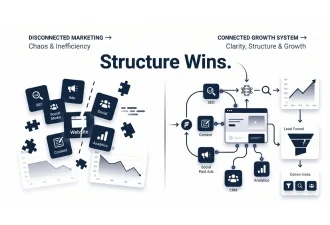
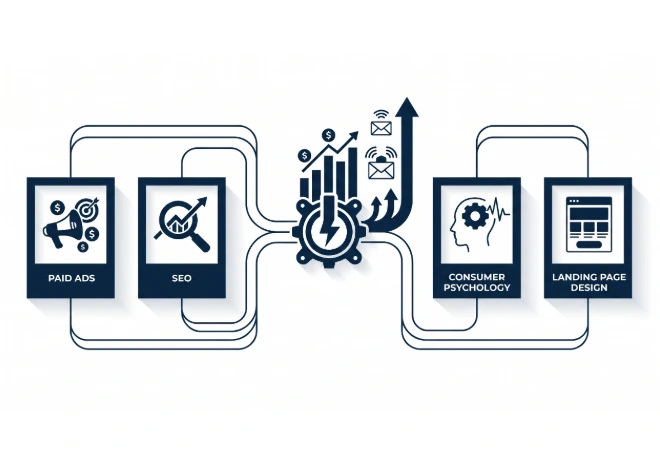
While channel expertise is valuable, sustainable growth usually comes from connecting multiple marketing activities into one integrated strategy.
For example:
- Search attracts visitors.
- Content builds authority.
- Website creates trust.
- Advertising accelerates visibility.
- Email nurtures prospects.
- Analytics identifies improvements.
Instead of isolated campaigns, every channel contributes toward the same business objectives.
The Futuready Growth Partnership Framework
Successful marketing relationships are built on collaboration rather than task execution.
Understand
Learn the business, customers, competitors, and long-term objectives.
Plan
Develop measurable strategies aligned with business priorities.
Execute
Launch integrated marketing activities across relevant digital channels.
Measure
Track meaningful business outcomes rather than vanity metrics.
Optimize
Continuously improve campaigns using performance insights and customer behaviour.
Scale
Expand successful strategies to support sustainable business growth.
This framework shifts the conversation from marketing activities to measurable business outcomes.
Evaluate Communication as Carefully as Capability
Even highly skilled agencies struggle if communication is inconsistent.
Before making a decision, understand:
- Who will manage your account?
- How frequently will meetings occur?
- How are reports presented?
- Who responds to urgent requests?
- How are recommendations communicated?
Strong communication creates transparency.
Transparency builds trust.
Trust strengthens long-term partnerships.
Experience Is Valuable, but Adaptability Is Essential
Marketing changes constantly.
Algorithms evolve.
Consumer behaviour shifts.
New technologies emerge.
An agency's ability to adapt often matters more than how many years it has been operating.
Look for evidence of continuous learning.
Do they discuss changing trends?
Do they explain why strategies evolve?
Do they recommend improvements instead of repeating outdated tactics?
The strongest partners remain curious and proactive.
Results Should Be Measured by Business Impact
Many businesses receive reports filled with impressions, clicks, followers, and engagement statistics.
While these numbers have value, leadership teams usually care about different questions.
Has revenue increased?
Are qualified leads improving?
Is customer acquisition becoming more efficient?
Is marketing delivering measurable return?
Effective agencies connect marketing performance with business outcomes.
They focus on metrics that influence growth rather than simply reporting platform activity.
Red Flags to Watch Before Signing an Agreement
Some warning signs become obvious only after campaigns begin.
Fortunately, many can be identified during initial conversations.
Be cautious if an agency:
- Guarantees specific rankings or overnight success.
- Avoids discussing reporting methods.
- Focuses only on selling packages.
- Doesn't ask questions about your business.
- Promises identical strategies for every client.
- Cannot explain previous results.
- Prioritizes vanity metrics over commercial outcomes.
Reliable partners set realistic expectations and explain both opportunities and challenges transparently.
The Right Agency Challenges Your Thinking
The most valuable agency relationships aren't built on agreeing with every request.
They're built on constructive conversations.
An experienced partner will occasionally recommend a different direction if evidence suggests a better approach.
Rather than simply completing assigned tasks, they contribute strategic ideas, identify opportunities, and help businesses make better marketing decisions.
That level of involvement creates long-term value.
Should You Choose a Full-Service Agency or a Specialist?
One of the most common questions businesses ask is whether they should work with a full-service agency or hire specialists for individual marketing channels.
The answer depends on your business objectives, internal resources, and long-term growth plans.
A specialist may be the right choice when your business needs expertise in one specific area, such as search optimization or paid advertising.
However, many growing businesses benefit from an integrated marketing approach where multiple channels work together under one strategy.
A full-service partner can coordinate activities across content, websites, advertising, analytics, automation, branding, and customer engagement, ensuring every campaign supports the same business objectives.
Instead of managing multiple vendors with separate strategies, businesses gain a unified direction that creates greater consistency and efficiency.
Technology Is Changing Digital Marketing
The marketing landscape continues evolving rapidly.
Artificial intelligence, automation, predictive analytics, and advanced customer insights are changing how businesses reach and engage audiences.
However, technology should support strategy—not replace it.
Forward-thinking agencies use technology to improve efficiency while maintaining creativity and human decision-making.
Examples include:
Smarter Audience Insights
Modern tools help identify customer behaviour, buying intent, and engagement patterns more accurately than ever before.
This enables businesses to create campaigns that are more relevant to their audiences.
AI-Assisted Content Planning
Artificial intelligence can support idea generation, campaign planning, content variations, and performance analysis.
Human expertise remains essential for developing authentic messaging and maintaining brand identity.
Marketing Automation
Automated workflows simplify lead nurturing, email communication, customer segmentation, and follow-up campaigns.
This allows businesses to deliver more personalized experiences without increasing manual effort.
Better Performance Measurement
Advanced reporting platforms combine data from multiple marketing channels, helping businesses understand which activities contribute most to growth.
Technology makes marketing more efficient, but sustainable success still depends on clear strategy, creativity, and continuous optimization.
Questions Every Business Should Ask Before Hiring
Choosing the right partner requires more than reviewing presentations or portfolios.
Meaningful conversations often reveal how an agency approaches problem-solving.
Consider asking questions such as:
- How do you understand a new client's business?
- What does your strategy development process involve?
- Which business metrics do you prioritize?
- How frequently will performance be reviewed?
- How do you adapt campaigns when results change?
- What level of involvement should we expect from your team?
- How do different marketing channels support one another?
- Can you explain the thinking behind previous successful campaigns?
The quality of these answers often provides better insight than impressive design portfolios or lengthy service lists.
Mini Case Study: Strategy Before Spending
Imagine a growing manufacturing company investing consistently in online advertising.
Website traffic increased each month, but qualified enquiries remained inconsistent.
Rather than recommending a larger advertising budget, the agency began by analysing the complete customer journey.
The review identified several opportunities:
- Website messaging lacked clarity.
- Landing pages answered only basic questions.
- Content failed to demonstrate industry expertise.
- Lead forms requested unnecessary information.
- Follow-up communication was inconsistent.
Instead of increasing marketing spend, the business improved these areas first.
Over the following months, enquiry quality improved significantly because visitors experienced a smoother and more informative buying journey.
The lesson was simple.
Growth often comes from improving strategy before increasing investment.
Long-Term Partnerships Create Better Results
Digital marketing isn't a one-time project.
Markets evolve.
Competitors change.
Customer expectations shift.
Search engines update their algorithms.
Advertising platforms introduce new features.
Businesses launch new products and services.
An agency that understands your business over time can respond more effectively to these changes than a partner focused only on short-term campaign execution.
Long-term collaboration also enables better decision-making because marketing strategies are continuously refined using historical performance data and customer insights.
The strongest partnerships become an extension of the internal business team rather than an external vendor relationship.
Common Mistakes Businesses Make When Hiring
Even experienced organizations sometimes make avoidable mistakes during the selection process.
Choosing Based Only on Price
Marketing should be evaluated as an investment rather than simply an expense.
The lowest quotation doesn't always provide the greatest long-term value.
Expecting Immediate Results
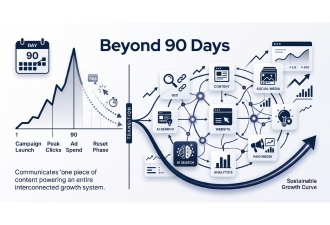
Building sustainable digital growth requires testing, optimization, and continuous improvement.
Businesses expecting overnight success often become disappointed despite positive long-term progress.
Focusing Only on One Channel
Digital marketing performs best when multiple channels support one another.
Relying exclusively on one platform limits long-term opportunities.
Ignoring Cultural Fit
An agency becomes part of your business conversations.
Shared values, communication style, and collaborative thinking contribute significantly to long-term success.
Not Defining Success
Without clear business objectives, both parties struggle to measure meaningful progress.
Well-defined expectations create stronger partnerships.
Futuready Agency Evaluation Framework
When comparing agencies, evaluate them using five essential dimensions.
Business Understanding
Do they ask thoughtful questions about your company, industry, customers, and objectives?
Strategic Thinking
Do recommendations align with business outcomes rather than individual marketing tactics?
Execution Capability
Can they consistently deliver high-quality work across relevant digital channels?
Transparency
Do they communicate openly about reporting, budgets, timelines, and performance?
Growth Mindset
Do they continuously recommend improvements, embrace innovation, and adapt strategies based on changing market conditions?
Agencies demonstrating strength across all five areas are more likely to become valuable long-term partners.
Digital Marketing Evaluation Checklist
Before making your final decision, review the following checklist.
- Have you clearly defined your business goals?
- Does the agency understand your industry?
- Is there a documented strategic planning process?
- Are reporting methods transparent?
- Will success be measured using business-focused metrics?
- Is communication structured and proactive?
- Does the agency demonstrate adaptability?
- Can they explain previous results clearly?
- Do recommendations feel customized rather than generic?
- Do you feel confident building a long-term partnership?
If several answers remain uncertain, continue evaluating additional options before making a commitment.
The Future of Agency Partnerships
The relationship between businesses and marketing agencies is changing.
Future partnerships will focus less on isolated campaigns and more on integrated growth strategies supported by technology, automation, and data.
Several trends are already shaping the future:
- AI-assisted campaign optimization
- Predictive customer insights
- Marketing automation
- Personalization at scale
- Privacy-focused data strategies
- First-party customer data
- Integrated analytics
- Video-first communication
- Conversational search optimization
- Cross-channel customer experiences
Businesses that embrace these changes with strategic partners will be better prepared for long-term digital success.
Final Thoughts
Choosing the right Digital Marketing Agency is one of the most important strategic decisions a business can make.
The ideal partner does far more than deliver campaigns or publish content.
It takes the time to understand your goals, studies your customers, develops measurable strategies, and continuously improves performance using data and market insights.
Instead of chasing short-term trends or vanity metrics, the right agency focuses on sustainable business growth, stronger customer relationships, and long-term competitive advantage.
Take time to evaluate experience, communication, transparency, strategic thinking, and adaptability before making your decision.
A thoughtful partnership can improve far more than your marketing results—it can influence the future direction of your business.
Because the best agencies don't simply help businesses market better.
They help businesses grow smarter.
Commonly asked.
Honestly answered.
A digital marketing agency helps businesses improve their online presence through strategic planning, content creation, search optimisation, advertising, website improvements, analytics, and customer engagement.
Look for an agency that understands your goals, develops customised strategies, communicates transparently, measures meaningful business outcomes, and demonstrates relevant experience.
Yes. A Digital Marketing Agency for Small Business can provide specialised expertise, access to advanced tools, and strategic guidance that may not be available internally, helping smaller organisations compete more effectively.
Timelines vary depending on objectives, competition, and marketing channels. While some paid campaigns can generate early results, sustainable growth typically develops through consistent optimisation over several months.
Businesses should expect strategic planning, regular communication, transparent reporting, continuous optimisation, and recommendations focused on achieving measurable business goals rather than simply increasing online activity.
A clear strategy ensures that every marketing activity supports broader business objectives. Without strategic direction, even well-executed campaigns may fail to deliver meaningful results.
Performance should be monitored continuously, with structured reporting and regular strategy reviews to identify opportunities for improvement and respond to changing market conditions.
Successful partnerships are built on trust, communication, transparency, adaptability, shared goals, and a commitment to continuous improvement.