How SEO, Social Media and Content Marketing Generate Leads
Generating leads online is rarely the result of a single marketing channel.
A business may rank well on Google but struggle to convert visitors. Another may have an active social media presence but attract very little qualified demand. A company may publish excellent content but fail to distribute it effectively.
The problem is often not that one channel is ineffective.
The problem is that the channels are working independently.
Modern customers move between search engines, websites, social platforms, videos, reviews, articles and other digital touchpoints before deciding whether to contact a business.
That makes an integrated approach increasingly important.
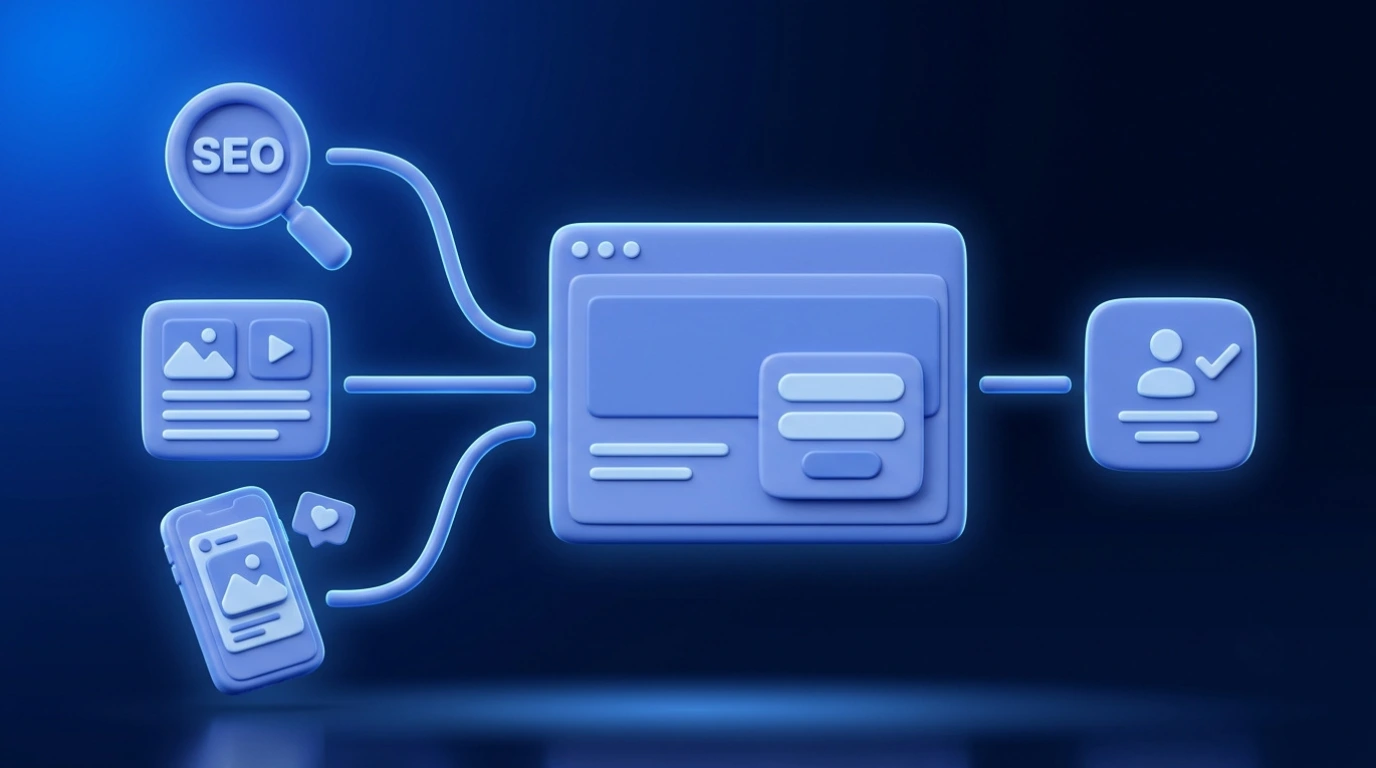
Digital Marketing for Lead Generation works best when SEO, social media and content marketing are connected through a common customer journey.
SEO helps people discover the business.
Content helps them understand the problem and evaluate solutions.
Social media creates engagement, trust and repeated exposure.
The website turns interest into action.
When these elements work together, marketing becomes more than a collection of individual campaigns. It becomes a connected lead-generation system.
Why One Marketing Channel Is Rarely Enough
Imagine someone is considering hiring a digital marketing agency.
They may first search Google for information.
They discover an educational article.
Later, they see the agency's social media post.
A few days later, they watch a video from the same company.
Eventually, they search for the agency's brand name and visit the website.
After reviewing services and case studies, they submit an enquiry.
Which channel generated the lead?
It is difficult to assign the entire outcome to one interaction.
The customer journey was created by multiple touchpoints.
This is why businesses should think about marketing ecosystems rather than isolated channels.
The Futuready Integrated Lead Engine™
Futuready Media approaches integrated lead generation through six connected stages:
Discover → Educate → Engage → Build Trust → Convert → Nurture
Each marketing discipline contributes differently.
Discover
SEO helps potential customers find the brand when they are actively searching.
Educate
Content answers questions and helps prospects understand their challenges.
Engage
Social media creates ongoing interaction and brand familiarity.
Build Trust
Case studies, insights, testimonials, videos and useful content demonstrate expertise.
Convert
Landing pages, forms, calls and clear CTAs turn interest into leads.
Nurture
Email, remarketing, social content and additional educational resources keep the brand relevant until the prospect is ready.
The strength of the model comes from the connections between these stages.
The Role of SEO in Lead Generation
SEO is often associated with rankings and organic traffic.
But rankings themselves are not the final objective.
The real business opportunity comes when relevant search visibility attracts people who have a genuine need.
For example, a company offering website development services could target searches related to:
- Website redesign
- E-commerce website development
- Business website development
- Website conversion optimization
- Website performance
- Website development costs
The important consideration is search intent.
Someone searching for:
"What is a website?"
has a different intent from someone searching:
"Website development agency for e-commerce business"
The second search may indicate stronger commercial intent.
Effective SEO therefore connects:
Search Demand → Relevant Content → Website Experience → Conversion
SEO Lead Generation Requires More Than Rankings
SEO Lead Generation becomes effective when organic visibility is connected to a conversion strategy.
A business can receive thousands of organic visitors and still generate very few enquiries if:
- Pages don't match search intent
- CTAs are unclear
- Forms are difficult to use
- Content doesn't build trust
- Service pages are weak
- Website speed is poor
- The next step isn't obvious
This means SEO and conversion optimization need to work together.
A visitor should quickly understand:
What does this company offer?
Who is it for?
Why should I consider it?
What should I do next?
Content Marketing Turns Search Traffic Into Understanding
Getting someone to visit a website is only the beginning.
Most prospects aren't ready to contact a business immediately.
They may need to understand:
- Their problem
- Available solutions
- Different approaches
- Costs
- Risks
- Benefits
- Alternatives
- Provider capabilities
This is where content becomes important.
Content marketing can include:
- Blog articles
- Case studies
- Guides
- Research
- Videos
- Infographics
- Whitepapers
- Comparison content
- FAQs
- Checklists
- Industry insights
The objective isn't simply to publish more.
It is to create content that moves a prospect closer to a decision.
Content Should Match the Buyer's Journey
Different prospects need different information.
Awareness stage
The prospect is identifying a problem.
Content could include:
- Educational articles
- Industry trends
- Problem-focused guides
- Introductory videos
Consideration stage
The prospect is evaluating solutions.
Content could include:
- Comparison articles
- Case studies
- Service explainers
- Expert guides
- Webinars
Decision stage
The prospect is evaluating providers.
Content could include:
- Client success stories
- Testimonials
- Pricing information
- Service pages
- Demonstrations
- Consultation offers
This creates a logical content journey.
Problem → Education → Evaluation → Trust → Action
Social Media Creates Repeated Brand Exposure
Search often captures existing demand.
Social media can help create and influence demand.
Someone may not be actively searching for a marketing agency today.
But they may repeatedly see:
- Marketing insights
- Case studies
- Short videos
- Industry commentary
- Customer results
- Educational content
Over time, the brand becomes familiar.
When the prospect eventually needs a service, the company may already be recognized.
This is one of the biggest differences between search and social.
Search often captures intent.
Social can influence attention and consideration before intent becomes explicit.
Turning Social Media Into a Lead Generation Channel
Social Media Leads are more likely to become valuable when social content is connected to a clear conversion journey.
For example:
LinkedIn Post → Educational Guide → Landing Page → Consultation
Or:
Instagram Reel → Service Page → WhatsApp → Enquiry
Or:
Facebook Ad → Lead Form → CRM → Sales Follow-up
Social media should therefore not exist separately from the website and content ecosystem.
Every important piece of social content should have a purpose.
It might:
- Build awareness
- Educate
- Generate engagement
- Drive traffic
- Build trust
- Generate enquiries
- Retarget existing visitors
How SEO and Social Media Strengthen Each Other
SEO and social media are often treated as separate disciplines.
They shouldn't be.
Social media can help distribute content that was created for organic search.
For example:
A business publishes a detailed article about improving e-commerce conversion rates.
The same insight can become:
- LinkedIn posts
- Instagram carousel
- Short video
- X post
- Newsletter
- Infographic
- Webinar topic
Now one content asset supports multiple channels.
At the same time, social engagement can reveal questions and topics that can inspire future search-focused content.
This creates a feedback loop.
Search insights → Content → Social distribution → Audience feedback → New content opportunities
How Content Connects SEO and Social Media
Content is often the bridge between search and social.
Consider a company publishing an article titled:
"How to Reduce E-commerce Cart Abandonment"
SEO can help the article attract people searching for relevant information.
Social media can distribute the article to an existing audience.
A short video can explain one key recommendation.
A carousel can summarize the main points.
A newsletter can send the article to existing subscribers.
A sales representative can share it with prospects.
One content asset can therefore serve multiple functions.
This is more efficient than creating completely separate content for every channel.
The Website Is the Conversion Hub
SEO may bring the visitor.
Social media may build familiarity.
Content may establish expertise.
But the website often becomes the place where the prospect decides whether to take action.
This makes website conversion optimization critical.
A lead-generation website should make several things clear:
Value proposition
What does the business help customers achieve?
Target audience
Who is the service designed for?
Differentiation
Why should the visitor consider this company?
Proof
What evidence supports the claims?
Action
What should the visitor do next?
Potential conversion points include:
- Contact forms
- Consultation requests
- Demo bookings
- Phone calls
- Downloadable resources
- Newsletter signups
- Product enquiries
Building a Connected Lead Funnel
A connected funnel might look like this:
- Google Search
- SEO Landing Page
- Educational Content
- Social Engagement
- Case Study
- Service Page
- Lead Form
- CRM
- Sales Follow-Up
The important thing is that each stage supports the next.
A prospect shouldn't feel as though they are moving between unrelated marketing channels.
The experience should feel consistent.
Online Lead Generation Requires Consistency
Online Lead Generation becomes more effective when the brand communicates consistently across channels.
Imagine a company presents itself as premium on its website but publishes low-quality social content.
Or its advertising promises fast service while its website provides no evidence.
Or its blog demonstrates expertise but its service pages contain very little useful information.
These inconsistencies create friction.
Customers don't evaluate channels independently.
They evaluate the brand as a whole.
Using Content to Capture Different Types of Demand
A mature content strategy should address multiple search and customer-intent categories.
Problem-focused content
Answers questions around customer challenges.
Solution-focused content
Explains approaches and potential solutions.
Comparison content
Helps prospects evaluate alternatives.
Service content
Explains what the company provides.
Proof content
Demonstrates experience and outcomes.
Decision content
Helps prospects determine whether the company is right for them.
This creates content coverage across the complete customer journey.
Lead Generation Through Paid and Organic Integration
Organic channels can generate long-term visibility.
Paid campaigns can accelerate reach.
When combined strategically, they can support each other.
For example:
- SEO identifies a high-value topic.
- Content is created.
- The content begins generating organic traffic.
- Paid social promotes the content to relevant audiences.
- Visitors are added to remarketing audiences.
- A later campaign promotes a relevant service.
- High-intent visitors convert.
This approach can turn individual channels into a connected acquisition system.
The Role of Remarketing
Many visitors won't convert on their first visit.
That doesn't mean the marketing failed.
Someone may read an article today and return several weeks later.
Remarketing can help maintain brand visibility during that consideration period.
Potential audiences include:
- Website visitors
- Product viewers
- Content readers
- Video viewers
- Social engagers
- Previous leads
- Abandoned carts
Remarketing becomes particularly useful when the purchase decision requires research.
A Practical Example
Consider a fictional B2B company that provides technology solutions to mid-sized businesses.
The company starts by creating SEO-focused content around common customer problems.
One article attracts organic traffic.
The marketing team then turns the article into:
- A LinkedIn carousel
- A short video
- An email newsletter
- A downloadable checklist
Social users engage with the content.
Some visit the website.
The company retargets those visitors with a case study.
Visitors who engage with the case study are directed toward a consultation page.
Sales then follows up with qualified enquiries.
The original blog article did not generate the entire result by itself.
The result came from the interaction between search, content, social distribution, remarketing and sales.
Measuring the Integrated Funnel
When multiple channels work together, measurement needs to move beyond individual platform reports.
Important areas include:
Acquisition
Where did visitors and prospects come from?
Engagement
Did they interact with the content?
Conversion
Did they complete the desired action?
Lead quality
Were the leads commercially relevant?
Sales
Did leads become opportunities and customers?
Revenue
What commercial value did marketing contribute?
Customer value
Did acquired customers generate repeat or long-term revenue?
This allows businesses to understand the full funnel.
Common Mistakes Businesses Make
Treating SEO as a traffic strategy
Traffic is useful, but relevant traffic that contributes to business outcomes is more valuable.
Posting on social media without a purpose
Consistent posting doesn't automatically create leads.
Publishing content without distribution
Excellent content can remain invisible if nobody discovers it.
Sending all traffic to the homepage
Different audiences need different landing experiences.
Using the same message everywhere
Each platform has different user behaviour and content expectations.
Measuring channels independently
A customer may interact with several channels before converting.
Ignoring lead quality
More leads don't necessarily mean better performance.
How Businesses Can Build an Integrated Strategy
A practical approach can begin with seven steps.
Step 1: Define the ideal customer
Understand the audience, problems, motivations and buying process.
Step 2: Map customer intent
Identify what customers search, ask and consume at different stages.
Step 3: Build topic clusters
Create interconnected content around important customer problems and solutions.
Step 4: Connect content with services
Every important content area should have a logical path toward relevant commercial pages.
Step 5: Repurpose strategically
Turn high-performing content into social posts, videos, emails and other formats.
Step 6: Build conversion pathways
Give prospects clear next steps.
Step 7: Measure the complete journey
Track the movement from discovery to lead to customer.
Futuready Integrated Lead Generation Checklist™
Before launching an integrated campaign, ask:
SEO
- Are we targeting relevant customer intent?
- Do our pages answer important questions?
- Are commercial pages optimized?
Content
- Do we have content for different funnel stages?
- Does our content demonstrate genuine expertise?
- Does every major content asset have a purpose?
Social
- Are we distributing useful content?
- Are social posts connected to business objectives?
- Are we engaging with the audience?
Website
- Is the value proposition clear?
- Are there strong calls to action?
- Is the conversion process simple?
Measurement
- Are leads being tracked?
- Can lead sources be identified?
- Is lead quality being measured?
- Can marketing activity be connected to sales?
If these elements work together, the business has a stronger foundation for sustainable lead generation.
The Future of Integrated Digital Marketing
The future isn't about choosing between SEO, social media or content.
It is about creating a system where each channel strengthens the others.
Search behaviour continues to evolve.
Social platforms increasingly influence discovery.
Content formats continue to diversify.
AI is changing how users research information.
Customers are also becoming more selective about the brands they trust.
As a result, businesses need a digital presence that can meet prospects wherever they are in the decision-making process.
The strongest strategies will connect:
Search → Content → Social → Website → Conversion → Sales → Retention
Instead of treating every channel as an independent department, businesses can build a unified customer acquisition ecosystem.
Final Thoughts
SEO, social media and content marketing become significantly more powerful when they work together.
SEO can help a business capture existing demand.
Content can educate prospects and demonstrate expertise.
Social media can create engagement and repeated exposure.
The website can convert interest into action.
Paid campaigns and remarketing can accelerate and reinforce the journey.
Sales and CRM data can then close the loop by showing which marketing activities contribute to actual customers and revenue.
The goal isn't to make every channel do everything.
The goal is to make every channel do its part of the customer journey.
When those parts are connected, marketing becomes more consistent, measurable and commercially meaningful.
Commonly asked.
Honestly answered.
SEO helps attract relevant search traffic, content educates and builds trust, while social media distributes content and creates ongoing engagement. Together, they can move prospects from discovery to consideration and conversion.
Yes. SEO can generate leads independently, particularly when a business targets strong commercial search intent. However, integrating social and content can create additional touchpoints and strengthen the overall customer journey.
There isn't one universally effective format. Case studies, comparison guides, service-focused articles, educational resources, webinars and decision-stage content can all contribute depending on the audience and buying cycle.
Social media becomes more commercially useful when content is targeted toward relevant audiences and connected to appropriate landing pages, offers, forms or consultation pathways.
Both can serve different purposes. Organic channels can build long-term visibility and authority, while paid campaigns can provide faster reach and targeted acquisition. The appropriate mix depends on objectives, budget and customer behaviour.
The timeline varies significantly by industry, competition, website authority, content quality and search demand. SEO is generally a longer-term acquisition channel rather than an instant lead source.
Businesses can track content-assisted conversions, direct conversions, landing-page activity, lead sources and CRM outcomes. Looking only at page views can miss the commercial contribution of content.
A high number of poorly qualified enquiries can consume sales resources without generating meaningful revenue. Qualified leads have a stronger connection to the business's target customer and commercial objectives.
The website often acts as the conversion hub. It should clearly communicate the value proposition, establish credibility, provide relevant information and make it easy for prospects to take the next step.
No. A strong social strategy should include a mixture of educational, engagement, credibility and promotional content. Constantly pushing sales messages can reduce the value of the overall content experience.