BSES
Powering Relationships, Digitally

When the Lights Go Out, the Timeline Lights Up
Most brands get to choose when to engage on social media. BSES Rajdhani and BSES Yamuna don't have that option. They are the power distribution companies serving millions of homes and businesses across Delhi. When something goes wrong, and in power distribution something will always eventually go wrong, complaints start appearing on Twitter and Facebook within minutes. Angry. Public. Visible to everyone.
This isn't a brand perception problem in the abstract. These are real people, sometimes sitting in summer heat with no fans running, venting frustration at an organisation that has an obligation to respond. How BSES handled those moments, in public and in real time, shaped what millions of Delhiites thought about the brand every single day.
An Operational Brief, Not a Creative One
Building an always on social media monitoring and response operation for both BSES entities across Twitter and Facebook was the core mandate. It needed to maintain a consistent and empathetic brand voice while coordinating with internal operations teams so that complaints raised online could actually be resolved at the infrastructure level. And it needed to be robust enough to handle the surge of posts that comes with a large-scale outage event, which can involve hundreds of simultaneous complaints in a very short window.
How we
solved it.
Continuous monitoring was set up across both platforms for both brands, covering mentions, hashtags, direct messages and comments. Alert thresholds were built so that a spike in complaint volume triggered an escalation protocol immediately rather than being caught in a routine review cycle.
Response frameworks were developed for each type of scenario because the patterns of complaint are actually quite consistent. Billing disputes, outage notifications, meter issues, new connection delays and general feedback each have their own best practice response logic. Having those frameworks in place meant the team could respond quickly and with genuine empathy rather than defaulting to the kind of corporate acknowledgement that only makes things worse.
The most important piece was the internal coordination protocol. A process was established for escalating high priority complaints to the relevant BSES operational team with tracking to ensure follow through and a mechanism for closing the loop publicly when the issue was resolved. That turned social media from a place where complaints went to die into a genuine service recovery channel.
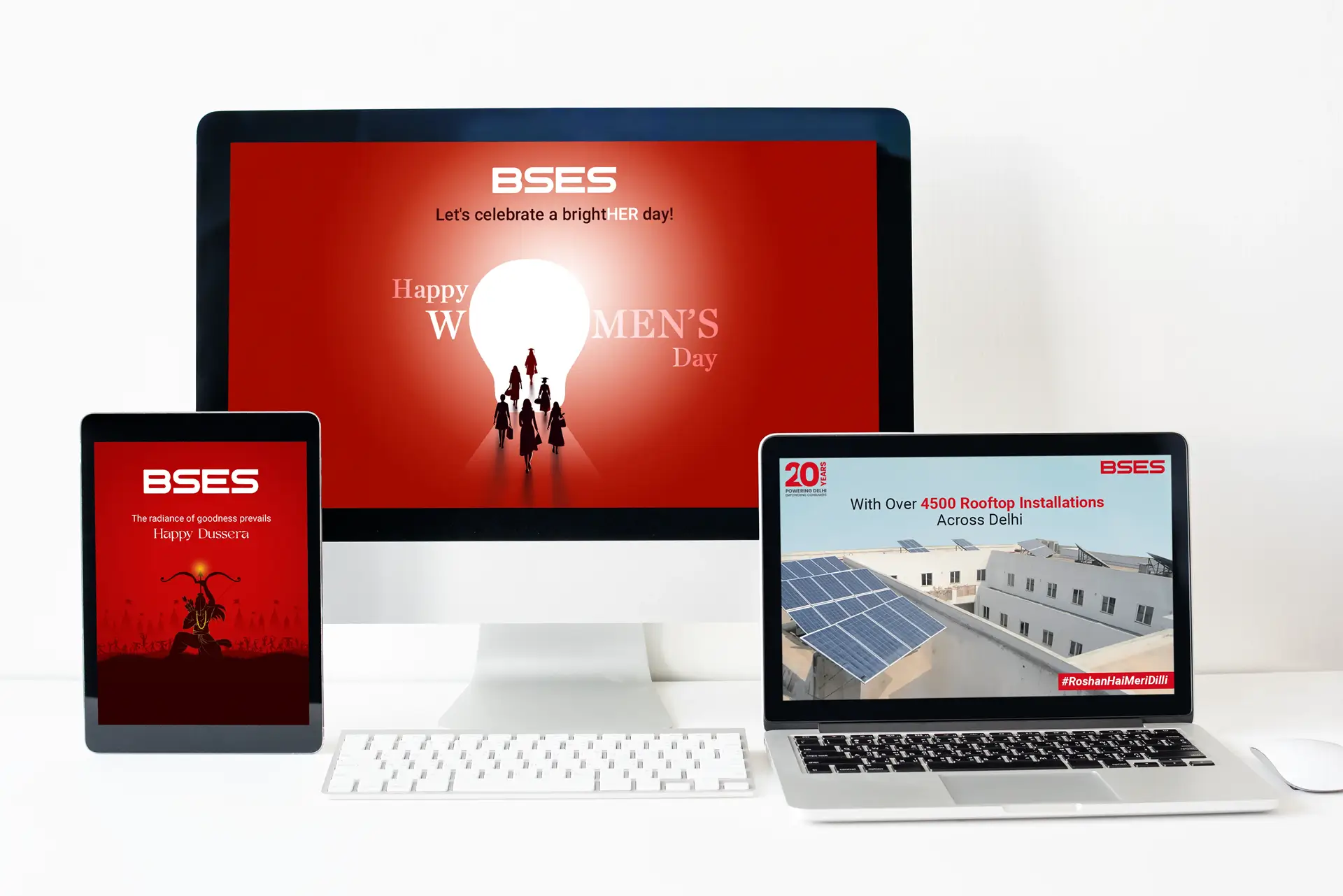
The work,
in view.
See it
in motion.
The BSES Delhi
outcome.
Response times improved significantly. The brand voice became consistent, empathetic and direct rather than corporate and defensive. Reputational exposure during outage events was reduced because public acknowledgement happened faster and status updates were clearer. Engagement quality improved markedly, with a much higher proportion of interactions resulting in a resolved or acknowledged outcome rather than an unanswered post sitting publicly on someone's timeline.
Managing social media for a regulated utility is an entirely different discipline from building a consumer brand online, and BSES makes that plain. The audience isn't aspirational. The content isn't entertaining. But the stakes of a poor response are high and visible, while the reward for a good one is real but quiet: a complaint resolved, a reputation protected, a customer slightly less frustrated than before. Glenmark's work in pharmaceutical community management, Noida Power's utility reputation programme and Reliance Group's conglomerate scale ORM all operate under the same quiet stakes logic.