Top Benefits of AI Content Creation Services for Growing Businesses
Business growth depends on one critical factor-consistent communication.
Whether attracting new customers, nurturing existing relationships, improving search visibility, or building brand authority, businesses need a steady stream of valuable content across multiple digital channels. Websites require fresh blogs, social media platforms demand regular updates, email campaigns need engaging copy, and search engines reward organizations that consistently publish helpful information.
For many growing businesses, meeting these demands is challenging.
Marketing teams often struggle with limited resources, tight deadlines, and increasing expectations. Creating high-quality content at scale without compromising quality can quickly become one of the biggest obstacles to sustainable growth.
This is where the Benefits of AI Content Creation Services become increasingly valuable.
Artificial intelligence is no longer simply a tool for writing faster. It has evolved into a powerful business enabler that supports research, planning, optimization, personalization, and content production while allowing marketing teams to focus on creativity and strategic decision-making.
Businesses that adopt AI thoughtfully are not replacing human expertise.
They are enhancing it.
This guide explores how AI-powered content creation helps growing businesses improve efficiency, strengthen marketing performance, and build a scalable foundation for long-term success.
Why Content Has Become the Foundation of Digital Growth
Modern customers rarely make immediate purchasing decisions.
Before contacting a business, they typically research products, compare alternatives, read educational resources, explore reviews, and evaluate credibility.
Every stage of this journey is influenced by content.
A single blog may introduce your expertise.
A case study may build confidence.
A landing page may answer important questions.
An email may encourage a prospect to return.
A social media post may keep your brand visible until the customer is ready to buy.
Content is no longer a supporting marketing activity.
It has become one of the primary drivers of digital business growth.
The Growing Challenge of Content Production
As businesses expand, so do their content requirements.
A typical organization may need to create:
- Website pages
- Blog articles
- Social media posts
- Email newsletters
- Product descriptions
- Video scripts
- Landing pages
- Advertising copy
- Customer education materials
- Frequently asked questions
Producing this volume consistently through traditional workflows often stretches internal teams beyond capacity.
Deadlines become difficult to manage.
Publishing schedules become inconsistent.
Quality begins to vary.
This is precisely where artificial intelligence delivers measurable value.
AI Supports People-It Doesn't Replace Them
One of the biggest misconceptions about AI is that it eliminates the need for human creativity.
In reality, successful businesses use AI to remove repetitive tasks while allowing their teams to focus on higher-value work.
Instead of spending hours brainstorming ideas or organizing information, marketers can invest more time in developing compelling messages, understanding customers, and improving business outcomes.
AI accelerates execution.
People provide strategy, creativity, expertise, and judgment.
Together, they create significantly stronger marketing results.
The Business Case for AI Content Creation
Growing companies often reach a point where content demand exceeds internal capacity.
Hiring additional writers may increase costs.
Outsourcing individual projects may create inconsistency.
Reducing publishing frequency may weaken marketing momentum.
AI offers an alternative.
It helps businesses scale production efficiently while maintaining quality through structured workflows and professional oversight.
The result is greater operational flexibility without sacrificing strategic focus.
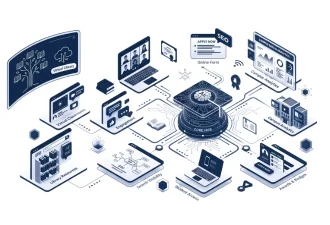
Futuready Intelligent Content Growth Framework
Businesses achieve the greatest value from AI when technology supports a structured marketing process rather than operating independently.
Identify
Understand business goals, customer needs, and content opportunities.
Plan
Develop a scalable content roadmap aligned with search intent and business priorities.
Create
Use AI to accelerate research, ideation, and drafting while maintaining human oversight.
Refine
Enhance quality through editing, SEO optimization, fact-checking, and brand alignment.
Distribute
Publish content across appropriate digital channels to maximize reach and engagement.
Measure & Improve
Analyze performance, identify opportunities, and continuously optimize future content.
This framework transforms AI from a productivity tool into a strategic growth accelerator.
Key Benefits of AI-Powered Content Creation
1. Greater Marketing Efficiency
Perhaps the most immediate advantage is improved productivity.
Tasks that previously required extensive manual effort-research, outlining, first drafts, and content organization-can now be completed much more efficiently.
This enables marketing teams to spend more time improving quality rather than simply producing volume.
Efficiency creates capacity for innovation.
2. Faster Time to Market
Business opportunities often depend on speed.
New product launches, seasonal campaigns, industry trends, and customer questions require timely communication.
AI helps businesses respond more quickly while maintaining consistency across marketing channels.
Organizations that publish valuable information sooner often gain an important competitive advantage.
3. Improved Content Consistency
Customers expect businesses to communicate regularly.
Irregular publishing schedules can reduce audience engagement and weaken brand visibility.
AI-supported workflows help maintain a consistent cadence without overwhelming internal teams.
Consistency builds familiarity.
Familiarity strengthens trust.
4. Better Scalability
As organizations grow, content requirements expand across departments, products, services, and markets.
Instead of rebuilding content operations from scratch, businesses can scale efficiently by integrating AI into existing workflows.
Growth becomes more sustainable because production capacity grows alongside business demand.
5. Stronger Research Capabilities
Quality content begins with quality information.
AI helps marketers analyze customer questions, industry developments, competitor activity, and emerging trends more efficiently than traditional manual research.
Better insights lead to better content decisions.
6. Enhanced Search Visibility
Search engines increasingly reward content that demonstrates expertise, relevance, and user value.
AI assists with organizing information, identifying topical opportunities, improving readability, and supporting optimization efforts.
When combined with human editorial review, businesses can create resources that serve both readers and search engines effectively.
7. More Personalized Customer Experiences
Modern audiences expect content that reflects their interests and challenges.
AI enables businesses to develop more relevant messaging for different industries, customer segments, and stages of the buying journey.
Relevant communication creates stronger engagement and higher conversion potential.
8. Smarter Decision-Making Through Data
AI helps analyze content performance at scale.
Instead of relying solely on assumptions, businesses can identify which topics, formats, and customer journeys produce the strongest results.
These insights support continuous improvement rather than one-time campaign execution.
AI Creates Competitive Advantage When Used Strategically
Technology alone rarely creates market leadership.
Competitive advantage comes from combining intelligent tools with experienced people, clear objectives, and consistent execution.
Businesses that integrate AI into broader marketing strategies position themselves to adapt more quickly, communicate more effectively, and scale more efficiently than competitors relying solely on traditional workflows.
The technology is valuable.
The strategy behind it is what creates lasting business impact.
How AI Improves Content Quality
One of the biggest misconceptions about artificial intelligence is that it only increases the speed of content production.
In reality, when integrated into a structured workflow, AI can also improve content quality by supporting research, organization, consistency, and optimization.
The key is ensuring that every AI-assisted draft is refined through human expertise.
Here's how AI contributes to higher-quality content.
Better Topic Research
Creating valuable content starts with understanding what customers actually want to know.
AI helps identify:
- Frequently asked questions
- Emerging industry trends
- Search patterns
- Customer pain points
- Competitive content gaps
These insights allow businesses to create content that addresses real customer needs instead of relying on assumptions.
Improved Content Structure
Well-organized content is easier to read and understand.
AI assists in creating logical outlines, clear headings, and structured information that improves readability for both users and search engines.
Combined with professional editing, this creates a better overall reading experience.
Consistent Brand Communication
As businesses grow, maintaining a consistent brand voice becomes increasingly difficult.
AI-supported workflows help marketing teams follow established messaging guidelines while allowing editors to add the personality and expertise that make the brand unique.
Consistency strengthens recognition and customer trust.
Continuous Optimization
Unlike traditional content that may remain unchanged for years, AI can support ongoing performance analysis.
Businesses can identify opportunities to:
- Update outdated information
- Expand high-performing articles
- Improve readability
- Strengthen internal linking
- Address new customer questions
Continuous improvement keeps content relevant in a constantly evolving digital landscape.
AI as a Growth Enabler
Artificial intelligence should be viewed as a business accelerator rather than simply a content creation tool.
Growing organizations often face similar challenges.
Marketing teams have limited time.
Customer expectations continue increasing.
Competition becomes stronger.
Publishing schedules become more demanding.
AI helps remove operational bottlenecks so teams can focus on strategic initiatives that influence business growth.
Instead of replacing marketers, AI allows them to contribute at a higher level.
Practical Business Applications
AI-powered content creation supports businesses across multiple departments.
Website Content
Businesses can develop informative service pages, landing pages, and educational resources more efficiently while maintaining consistency.
Blogs and Knowledge Centers
Organizations can publish valuable educational content regularly, helping build authority and improve organic visibility over time.
Social Media Campaigns
AI can support planning, caption creation, campaign ideas, and platform-specific messaging while allowing creative teams to refine the final communication.
Email Marketing
Businesses can develop personalized email campaigns that nurture prospects, announce product launches, and strengthen customer relationships.
Product and Service Content
Companies managing large product or service catalogs can scale descriptions efficiently while maintaining consistency across their websites.
These applications demonstrate how AI contributes throughout the customer journey rather than supporting only one marketing channel.
Mini Case Study: Scaling Content Without Expanding the Team
Imagine a growing B2B software company with a small marketing department.
The team wanted to publish weekly blogs, update website pages, create social media campaigns, and support product launches.
Despite having strong ideas, limited resources meant content production was inconsistent.
Instead of hiring multiple additional writers, the company introduced AI into its workflow.
Research, outlining, and first drafts became significantly faster.
Editors focused on improving messaging, adding industry expertise, optimizing for search, and maintaining the company's brand voice.
Within several months, the business achieved:
- More consistent publishing
- Faster campaign launches
- Better collaboration across teams
- Improved search visibility
- Higher engagement with educational content
The biggest benefit wasn't simply creating more content.
It was allowing the existing team to deliver higher-value work without compromising quality.
Common Myths About AI Content Creation
As AI adoption increases, several misconceptions continue influencing business decisions.
Myth 1: AI Replaces Human Creativity
Reality:
AI supports creativity by handling repetitive tasks, while people remain responsible for strategic thinking, storytelling, and customer understanding.
Myth 2: AI Content Always Sounds Generic
Reality:
Generic content usually results from poor strategy or lack of editorial review.
Well-managed AI workflows produce highly relevant, brand-specific content.
Myth 3: AI Is Only Useful for Large Enterprises
Reality:
Businesses of every size can benefit from AI, especially growing organizations seeking greater efficiency without significantly increasing operational costs.
Myth 4: AI Eliminates the Need for SEO
Reality:
Search optimization remains essential.
AI supports SEO, but experienced professionals are still needed to understand search intent, user behaviour, technical optimization, and content quality.
Myth 5: Publishing More Automatically Produces Better Results
Reality:
Success comes from creating valuable content that solves customer problems and supports business objectives.
Quality consistently outperforms quantity.
Futuready AI Content Success Framework
Businesses achieve sustainable results when AI becomes part of a structured marketing process.
Assess
Evaluate business objectives, customer expectations, and existing content performance.
Integrate
Introduce AI into research, planning, and production workflows without disrupting brand consistency.
Collaborate
Combine AI capabilities with experienced writers, strategists, SEO specialists, and editors.
Optimize
Continuously improve content using analytics, customer insights, and evolving search behaviour.
Scale
Expand successful workflows across additional products, services, industries, and markets while maintaining quality standards.
This framework enables organizations to grow confidently while protecting the quality and credibility of their content.
AI Content Implementation Checklist
Before integrating AI into your marketing operations, review the following checklist.
- Have you defined clear business objectives?
- Do you understand your target audience?
- Is there a documented content strategy?
- Will human editors review every published asset?
- Are SEO, GEO, and AEO integrated into the workflow?
- Is brand voice documented and consistently applied?
- Will performance be measured using meaningful KPIs?
- Is there a process for updating content regularly?
- Can your workflow scale as the business grows?
- Are AI tools supporting your team rather than replacing strategic thinking?
Organizations that answer "yes" to these questions are better positioned to maximize the value of AI-powered content creation.
The Future of AI-Powered Content
Artificial intelligence will continue reshaping digital marketing, but the businesses that benefit most will be those that combine technological innovation with authentic human expertise.
Future developments are likely to include:
- Hyper-personalized customer experiences
- AI-assisted content planning
- Predictive topic discovery
- Real-time content optimization
- Voice and conversational search experiences
- Interactive multimedia content
- Automated localization for global markets
- Advanced performance analytics
- Stronger emphasis on content authenticity
- Deeper integration between AI and marketing automation
Organizations that embrace these developments strategically will be better prepared to adapt to changing customer expectations and competitive markets.
Final Thoughts
The Benefits of AI Content Creation Services extend far beyond producing content more quickly.
When implemented strategically, AI helps businesses improve efficiency, strengthen content quality, maintain consistency, support search visibility, and scale marketing efforts without compromising brand integrity.
However, technology alone is not the differentiator.
Long-term success comes from combining AI with experienced professionals who understand customer behaviour, business objectives, and effective communication.
Growing businesses that embrace this balanced approach will be better equipped to build authority, attract qualified audiences, and create meaningful customer relationships in an increasingly competitive digital landscape.
The future of content marketing isn't about choosing between AI and people.
It's about enabling both to work together to create exceptional business outcomes.
Commonly asked.
Honestly answered.
AI content creation services use artificial intelligence alongside human expertise to produce blogs, website content, social media posts, email campaigns, product descriptions, and other marketing assets more efficiently.
They help businesses scale content production, improve consistency, accelerate campaign execution, support search visibility, and free marketing teams to focus on strategic initiatives.
No. AI enhances productivity, while human professionals provide strategy, creativity, fact-checking, brand alignment, and editorial quality.
Yes. Content that is accurate, helpful, original, and aligned with user intent can perform well when it is reviewed and optimised by experienced professionals.
Absolutely. AI enables smaller teams to create high-quality marketing content consistently without requiring significant increases in internal resources.
AI can assist with blogs, website pages, social media content, email marketing, product descriptions, landing pages, video scripts, FAQs, and more.
Success should be measured through business-focused metrics such as organic traffic, engagement, qualified leads, conversion rates, customer retention, and revenue contribution.
The combination delivers the efficiency of automation while preserving the creativity, strategic thinking, authenticity, and trust that customers expect from modern brands.