From Content Creation to Content Ecosystem: How to Build a Self-Growing Marketing Engine
Most businesses are stuck on a content treadmill. They create a blog post. They publish it. They share it once on LinkedIn and once on Instagram. By next week it is forgotten. The following week, the cycle starts again. More effort goes in. The same results come out.
This is content creation. It is not a content ecosystem. And the difference between the two is the difference between a marketing activity and a marketing engine.
A content ecosystem is a system where every piece of content you produce feeds other channels, strengthens other assets, and compounds in value over time instead of expiring after a single cycle of distribution. Businesses that have built one are not necessarily producing more content than their competitors. They are getting dramatically more return from every piece they create. That compounding effect is what our content marketing service is designed to build for businesses that are ready to stop running and start growing.
Why Content Creation Alone Will Never Be Enough
There is a widespread belief that the solution to a content marketing problem is more content. Post more frequently. Cover more topics. Publish across more platforms. If the current content is not working, the instinct is to produce more of it.
This belief is responsible for an enormous amount of wasted budget and frustrated marketing teams.
The problem with content creation as a strategy is that it is entirely volume-dependent. Every piece you create requires a fresh investment of time, budget, and attention. The moment you stop creating, the machine stops. There is no compounding. There is no system. There is only the last thing you published and the next thing you have to produce.
A content ecosystem operates on a completely different principle. It is designed so that what you create today is still working for you in six months, in a year, in two years. New content feeds old content. Old content feeds new campaigns. Campaigns drive audiences back to content. The whole system grows more valuable the longer it runs, without requiring a proportional increase in output.
The businesses that have made this shift are not the ones with the biggest content teams. They are the ones that stopped thinking about content as production and started thinking about it as architecture.
What a Content Ecosystem Actually Looks Like
Before getting into how to build one, it is worth being specific about what a content ecosystem is and is not.
It is not a content calendar with more columns. It is not repurposing one blog post into three social media captions. It is not running ads to boost a popular post. Those are distribution tactics. They are useful but they do not create an ecosystem.
A content ecosystem is a network of interconnected assets where each piece is designed to do a specific job, feed into at least one other asset, and contribute to a clearly defined commercial outcome.
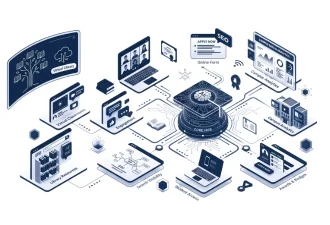
In a functioning ecosystem, a long-form blog post on a high-intent keyword attracts organic search traffic and links internally to a service page. That same blog post becomes the script for a video that lives on YouTube, where it captures a different audience searching on a different platform. That video gets cut into short clips distributed through social media to build familiarity with the brand among audiences who have not yet searched. The social audience who engages gets retargeted with a paid ad that references the same core idea from the blog. The ad drives them to a landing page where the full argument is made and a conversion action is presented.
One idea. Five assets. One interconnected journey. That is what an ecosystem looks like in practice.
Every piece of content in that sequence is doing something the others cannot do alone. The blog builds SEO authority. The video builds trust through demonstration. The social clips build brand familiarity. The ad creates urgency. The landing page converts. Remove any one layer and the system weakens. Add them all together and you have a machine that keeps running long after the initial effort of creation.
The Foundation: Pillar Content That Earns Its Keep Over Time
Every content ecosystem needs a foundation. And the foundation is always long-form, high-depth content built around topics that your ideal buyer is actively searching for.
This is your pillar content. It is the material that earns organic traffic from Google and AI search tools because it answers real questions with real depth. It is the content that gets linked to from other websites because it is the most comprehensive treatment of a subject in its category. It is the content that your entire repurposing strategy draws from because it contains enough substance to be broken into dozens of smaller pieces without losing meaning.
Most businesses underinvest in pillar content because the ROI is not immediate. A 2000-word article takes time to rank. It takes time to accumulate backlinks. The temptation is to produce shorter, faster content and post it more frequently.
That temptation leads directly to the treadmill. Short content with no depth does not rank, does not get linked to, and does not give you anything meaningful to repurpose. It requires constant effort for minimal compounding return.
Pillar content does the opposite. It takes longer to produce and longer to gain momentum. But once it does, it generates traffic, authority, and repurposing material continuously for years. A single well-built pillar piece can drive more value over a three-year window than fifty short posts combined.
The discipline of choosing the right pillar topics comes from understanding exactly what questions your buyer is asking at every stage of their journey, and identifying which of those questions nobody else in your category is answering with genuine depth. That is where organic authority gets built and defended.
The Repurposing Layer: Making Every Asset Work Harder
The second layer of a content ecosystem is repurposing. Not shallow repurposing where you copy a paragraph from a blog and paste it as a caption. Deliberate, format-specific repurposing where the core idea is translated into the native language of each platform.
A long-form blog post contains multiple ideas. Each of those ideas can become a standalone social post with a specific point of view. The most important insight can become the hook of a short video. The key takeaways can become a carousel. The argument in its entirety can become a webinar or a recorded deep-dive. The data points and frameworks can become infographics or LinkedIn documents.
Each format reaches a different audience in a different mindset on a different platform. The person watching a 60-second Instagram reel is not in the same headspace as someone reading a 2000-word blog post. But they are both potential buyers. And a strong content ecosystem meets both of them where they are with the same core message expressed in the format they are most likely to engage with.
Video production sits at the centre of this repurposing layer for a very specific reason. Video is the format that does the most work across the most platforms simultaneously. A single well-produced brand or explainer video can be cut into short clips for Instagram and YouTube Shorts, embedded in a blog post to improve dwell time, used as a pre-roll ad, shared across LinkedIn for B2B audiences, and hosted on your service pages to build trust with visitors who are evaluating whether to make contact. No other content format has that range.
The Distribution Layer: Getting Your Ecosystem in Front of the Right People
Creating a strong content ecosystem means nothing if the right people never encounter it. Distribution is the layer that determines how quickly the ecosystem grows.
Most businesses treat distribution as an afterthought. The content gets published and then shared once with an average caption on whatever platforms the team manages. Two days later the post is buried and the content has reached a fraction of the audience it could have.
Strategic distribution means planning how each piece of content will be introduced to new audiences and reintroduced to existing ones. It means using organic search to capture intent-driven traffic over time. It means using social media to build familiarity with audiences who have not yet searched for you. It means using email to re-engage people who already know you but have not converted yet. And it means using paid amplification to accelerate the reach of content that has already demonstrated organic resonance.
That last point is one that most businesses miss entirely. They treat paid media and content as separate budgets with separate objectives. The smarter approach is to use organic performance data to identify which content is already resonating and then put paid budget behind amplifying exactly those pieces to a broader but still relevant audience.
Our blog on how brands dominate Google, YouTube, and AI answers together explains the multi-channel authority strategy that sits behind effective distribution at this level. Distribution is not about being everywhere. It is about being consistently present in the specific places where your buyer pays attention.
The SEO Layer: Building Organic Gravity Over Time
SEO is what transforms a content ecosystem from something you manage into something that grows on its own.
Every piece of pillar content you publish is a potential source of ongoing organic traffic. Every internal link you build between your content assets transfers authority and keeps visitors moving through your ecosystem rather than bouncing out of it. Every backlink you earn from an external website is a vote of confidence that increases your domain authority and makes your next piece of content easier to rank.
These signals compound. A website with 50 well-structured, well-linked pieces of pillar content in a defined topic area has a significant authority advantage over a competitor with 500 thin, disconnected posts. Google's systems and AI search tools alike reward depth, consistency, and topical authority over volume.
This is why the internal linking structure of your content ecosystem matters as much as the content itself. Every blog post should link to at least one relevant service page and at least one related piece of content. Every service page should link to supporting blog content and relevant case studies. The entire ecosystem should be woven together so that a visitor arriving at any entry point can travel through multiple relevant assets before reaching a conversion point.
Our SEO, AEO and GEO service is built around exactly this kind of structural optimisation. The goal is not just to rank individual pages. It is to build a content architecture that earns authority holistically and extends that authority into AI search visibility simultaneously.
The Measurement Layer: Knowing What Is Working and What Is Not
A content ecosystem without measurement is just a more elaborate version of the treadmill. You are producing more, distributing more, and repurposing more. But without data showing which pieces are generating leads, which formats are converting audiences, and which distribution channels are producing qualified traffic, you are still flying blind.
The measurement layer of a content ecosystem tracks three things above all else.
First, it tracks organic traffic by content piece and content topic. This tells you which parts of your ecosystem are generating inbound discovery and which topics are attracting buyers rather than casual readers.
Second, it tracks assisted conversions. Not every piece of content will directly produce a lead. But many pieces will appear in the journey of a buyer who eventually converts through a different channel. Knowing which content assets are consistently appearing in the paths of converted leads tells you where the ecosystem is genuinely working, even when the piece itself does not have a form submission to show for it.
Third, it tracks content to pipeline contribution. Which blog posts, videos, or social content pieces are correlating with lead quality and sales velocity? The answer to this question tells you exactly where to invest more deeply and what to stop producing.
This revenue-connected approach to content measurement is what separates businesses with a content strategy from businesses with a content ecosystem. The ecosystem is always being optimised not just for output but for commercial outcome. Our blog on mapping every digital touchpoint that drives conversions covers how this attribution thinking works across the full buyer journey and why it changes every decision a content team makes.
When the Ecosystem Becomes Self-Growing
The term self-growing marketing engine is not a metaphor. It describes a specific stage in the development of a content ecosystem where the compounding effects of accumulated authority, distribution reach, and audience familiarity begin to reduce the marginal cost of growth.
At this stage, a new piece of content you publish has a pre-existing advantage. It lands on a domain with established authority, which means it ranks faster. It gets shared by an audience that already trusts your brand, which means it reaches further on social. It gets clicked by users who have already encountered your brand elsewhere, which means the conversion rate is higher because familiarity has already done part of the trust-building work.
This is the economic case for building an ecosystem rather than running a content calendar. The early investment is higher. The returns are slower to start. But the compound curve is steep and the businesses that have built to this stage are genuinely difficult to displace, not because they are spending more than competitors but because they have built something that takes years to replicate.
Getting there requires a clear content strategy, consistent production of pillar assets, deliberate repurposing across formats, structured distribution across channels, and measurement that keeps the whole system pointed toward commercial outcomes rather than vanity metrics.
None of this is complicated in isolation. The challenge is building all the layers simultaneously and maintaining the discipline to let the ecosystem compound rather than abandoning it when early returns feel slow.
The brands in your category that seem to be everywhere did not get there by creating more content. They got there by building a system that made every piece of content work harder, reach further, and last longer than anything produced by a business still stuck on the treadmill.
Commonly asked.
Honestly answered.
A content strategy is a plan for what to create, when to create it, and who to create it for. A content ecosystem is the interconnected system of assets, channels, and distribution mechanisms that makes that content compound in value over time. A strategy answers the question of what to produce. An ecosystem answers the question of how to make everything you produce work harder, reach further, and grow without requiring proportionally more effort as the system matures.
The foundation, pillar content, internal linking structure, and repurposing workflow, can be built within three to six months. The compounding effects of organic authority, audience familiarity, and distribution reach typically begin to accelerate between six and twelve months. A fully self-growing ecosystem where new content benefits from existing authority and reaches a built-in distribution audience is generally a twelve to twenty-four month build for most businesses starting from a modest content base.
Long-form pillar content built around high-intent keywords that your ideal buyers are actively searching for. This content should cover a topic with enough depth to rank organically, earn backlinks from relevant sources, and provide enough substance to be repurposed into multiple other formats. The pillar content is the asset that everything else in the ecosystem draws from, distributes, and links back to.
Repurposing is the layer that multiplies the reach of every asset you create. A single well-researched blog post can become a video, a series of social posts, a carousel, an email, an ad, and a podcast episode. Each format reaches a different audience segment on a different platform. Repurposing is not copying and pasting across channels. It is translating the same core idea into the native format of each platform so the message lands effectively regardless of where the buyer first encounters it.
No. The most critical requirement is not team size but strategic clarity. A small business with a clear content architecture, consistent pillar content production, and disciplined repurposing can build a highly effective ecosystem with a small team. The key is prioritising depth over volume, choosing a focused set of topics to own, and building the distribution and repurposing workflow before scaling production. Many of the best-performing content ecosystems were built by teams of two or three people with a clear system.
SEO is the layer that turns your content ecosystem into an inbound lead generation asset. Without SEO, your content can only reach the audience you already have. With SEO, every piece of pillar content you publish becomes a source of new organic traffic from buyers actively searching for the problems you solve. The internal linking structure of your ecosystem distributes that traffic intelligently across service pages and conversion points. And the topical authority you build over time makes each new piece you publish easier to rank than the last.
Trying to be present on every channel simultaneously before having strong pillar content at the foundation. Businesses spread their effort across Instagram, LinkedIn, YouTube, a blog, a podcast, and an email list all at once and produce thin, undifferentiated content on all of them. The result is a lot of activity with no authority built anywhere. The correct sequence is to build depth first through pillar content, then systematically repurpose that depth into formats for each channel, then scale distribution once the foundation is strong enough to support it.