Hafele
Quality Products, Compelling Stories
The Hardware That Holds Great Design Together
Hafele has been making furniture fittings and architectural hardware since 1923. The company operates across 150 countries and makes products that span from soft close drawer mechanisms to contactless door access systems. These are the things that make a kitchen feel premium, the details that architects specify and homeowners notice only when they are missing.
In India, the primary buyer is the trade professional. Architects, interior designers and kitchen studio owners specify products for their clients' spaces and their recommendation carries far more weight than any advertisement ever could. The secondary audience is the aspirational homeowner who encounters Hafele through a designer's specification and may later seek it out for their own renovation.
Reaching both audiences with the same content doesn't work. A trade professional wants technical depth and real installation context. A homeowner wants to see beautiful finished rooms and understand why the quality difference is worth paying for. Building a content programme that served both without compromising either was the real task.
A Product Category That Photographs Poorly
A furniture fitting is genuinely difficult to market through static images. The value of a soft close drawer mechanism is in how it feels, not how it looks in a photograph. Video was the only format that could show products in real use, in real spaces, doing the thing that made them worth specifying.
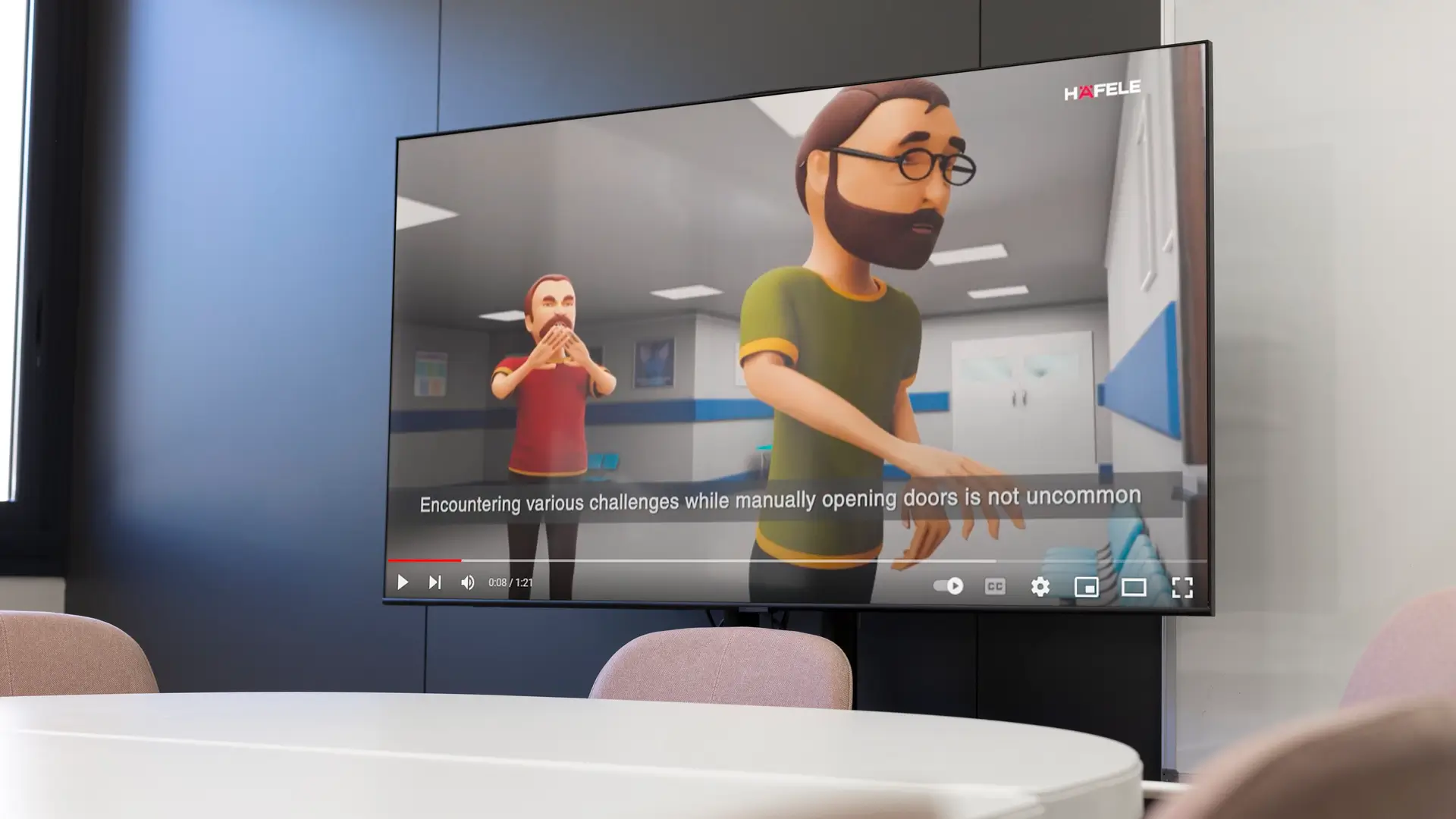
Fifty plus product videos were produced across the engagement. Each one was built around a specific use scenario rather than a product specification. A contactless door system in a commercial kitchen where hygiene requirements made hands free access genuinely valuable. A pocket door system in a small apartment where wall space was precious. A drawer organiser system in a fitted wardrobe where the question was not what it looked like but how it worked in practice.
The scenarios were chosen based on the questions architects and interior designers actually ask during the specification process, which immediately made the content more useful and more likely to be shared within trade communities.
How we
solved it.
LinkedIn content targeted trade professionals with specification relevant context and technical information. Instagram content was calibrated for the aspirational homeowner through beautiful finished rooms, tactile product close ups and renovation inspiration. Each platform's content was produced natively for that platform rather than cross posted from a single master creative.
Social impressions reached 3 million. Website traffic from social channels grew by 120%. Video engagement rate grew by 250%, which measures how attentively people were watching rather than simply how many saw the content. For a brand where product quality is communicated through close attention, that number matters more than reach.
The work,
in view.
See it
in motion.
The Hafele India
outcome.
The 50-plus videos produced across this engagement are not campaign assets with a shelf life. They are brand assets that continue to drive specification conversations, generate social engagement and bring architects and homeowners to the website long after their initial release. Content with a long working life is clearly the right investment for a company whose products are installed in spaces that will look the same in 20 years, the same logic behind Schindler's corporate video library, The BNK Group's portfolio led content programme and TotalEnergies' brand filmmaking in the energy sector.