The Multi-Channel Authority Strategy: How Brands Dominate Google, YouTube and AI Answers Together
There was a time when ranking on Google was enough.
You wrote a blog, optimized it for search, and the traffic followed. That era is gone.
Today your potential customers are not just searching on Google. They are watching YouTube. They are asking ChatGPT, Gemini, and Perplexity for recommendations. They are scrolling through Instagram and LinkedIn for validation. They are everywhere, all at once.
The brands winning in 2025 are not the ones ranking on a single platform. They are the ones showing up consistently across every surface their audience uses to make decisions.
This is the Multi-Channel Authority Strategy, and it is the most powerful approach a brand can take to build lasting digital dominance.
What Is Multi-Channel Authority and Why Does It Matter?
Multi-Channel Authority is the state where your brand is recognized as a credible, trusted source of information not just on Google but across YouTube, AI answer engines, social media platforms, and beyond.
When someone searches for a topic related to your business and finds your blog on Google, your video on YouTube, your brand mentioned in an AI Overview, and your posts on LinkedIn all in the same session, something powerful happens. You stop being just another option. You become the obvious choice.
This is not about being everywhere for the sake of it. It is about being present at every stage of your audience's decision-making journey with the right format of content on the right platform.
A strong digital strategy is what ties all these channels together into one coherent authority-building system.
The Four Channels That Power Multi-Channel Authority
Channel 1: SEO (Owning Google Search and AI Overviews)
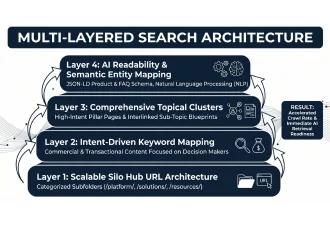
Search Engine Optimization remains the anchor of any multi-channel strategy. It is what makes your written content discoverable to people who are actively looking for what you offer.
But SEO in 2025 is about far more than keywords and backlinks. Google's AI Overviews, Featured Snippets, and People Also Ask sections now dominate the top of search results. To appear in these positions, your content must be structured to answer specific questions directly, clearly, and concisely.
Brands that optimize for topical authority, meaning they cover an entire subject comprehensively rather than targeting isolated keywords, are the ones that earn these premium placements consistently.
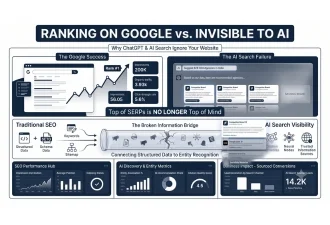
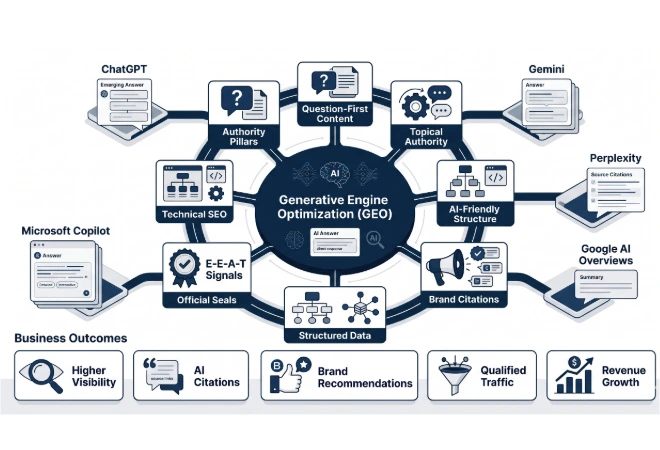
Beyond Google, AI platforms like ChatGPT, Gemini, and Perplexity pull their answers from sources they consider authoritative and well-structured. A brand with strong SEO foundations is far more likely to be cited in AI-generated responses than one without it.
SEO is not just a traffic strategy anymore. It is a brand authority strategy.
Channel 2: YouTube (The Search Engine Nobody Is Ignoring)
YouTube is the world's second largest search engine. In India, it is often the first place people go to understand a product, evaluate a service, or learn how to solve a problem before making a purchase decision.
A brand that shows up on YouTube for relevant searches builds a level of trust that written content alone cannot achieve. Watching someone explain a concept, demonstrate a product, or share genuine expertise creates a human connection that text simply cannot replicate.
YouTube also feeds directly into Google search results. Videos frequently appear in Google's top positions, giving brands a second opportunity to capture attention on the same search page. A user who sees your blog post and your YouTube video in the same Google search result is significantly more likely to click through and trust your brand.
Consistent, well-produced video and content is the engine that powers YouTube authority over time.
Channel 3: Content Marketing (The Foundation Beneath Everything)
Every channel in a multi-channel strategy runs on content. Without strong content at the core, SEO has nothing to optimize, YouTube has nothing to script, social media has nothing to distribute, and AI engines have nothing to reference.
Content marketing at its best is not just about writing blogs or making videos. It is about building a body of work that answers the real questions your audience has at every stage of their journey. From first awareness all the way through to purchase and beyond.
Long-form blog content builds topical depth. Short-form content builds daily visibility. Case studies and testimonials build trust. Educational guides build authority. Together they create a content ecosystem that compounds in value month after month.
The brands that dominate their industries are almost always the ones that have invested the longest and most consistently in quality content creation.
Channel 4: Social Media (The Amplification and Credibility Layer)
Social media is where your content gets discovered by people who were not actively searching for you.
When your blog post is shared on LinkedIn and generates discussion among industry professionals, it builds credibility. When your YouTube video is clipped into a Reel and reaches thousands of new viewers, it builds awareness. When your brand consistently shows up with valuable, relevant content across social platforms, it builds the kind of familiarity that makes people feel they already know and trust you before they ever visit your website.
Social media also creates social proof. Comments, shares, saves, and follower counts all serve as visible trust signals that influence how new audiences perceive your brand.
Perhaps most importantly, active social media presence feeds engagement signals back to search algorithms, strengthening the overall authority of your brand across the digital ecosystem.
Strong branding ensures your social media presence feels consistent, credible, and unmistakably yours across every platform.
How These Four Channels Work Together to Create Authority
The real power of this strategy lies in how each channel reinforces the others.
Here is what the system looks like in practice:
- Your SEO research identifies a high-value topic your audience cares about
- You publish a detailed, well-structured blog post targeting that topic
- The blog topic becomes the script for a YouTube video that ranks independently
- Social media distributes both the blog and the video to your existing audience
- The engagement and traffic signals strengthen your overall domain authority
- AI platforms like Google, ChatGPT, and Perplexity begin citing your content in generated answers
- A new user discovers you through an AI answer, validates you on YouTube, and converts through your website
This is not a funnel. It is a flywheel. Once it is spinning, it builds momentum that compounds with every piece of content you add to the system.
You can see how this approach has created measurable results for real brands by exploring our work.
Why AI Answer Engines Are Now a Critical Part of Brand Visibility
This is the element most brands in India are not yet thinking about, and it represents a massive opportunity for those who act early.
AI-powered platforms including Google AI Overviews, ChatGPT Search, Perplexity, and Gemini are increasingly the first place people get answers. These platforms do not just pull from any website. They pull from sources that demonstrate genuine expertise, clear structure, consistent publishing, and strong topical authority.
A brand with a multi-channel presence across SEO, YouTube, and content marketing is far more likely to be referenced in AI-generated answers than a brand that exists only on one channel.
Optimizing for AI answer engines, often called Generative Engine Optimization or Answer Engine Optimization, is not a separate strategy. It is the natural outcome of building genuine multi-channel authority the right way.
The Brands That Win Are the Ones That Show Up Everywhere
Consider two businesses in the same industry. Both have similar products and similar budgets.
Brand A runs Google ads and maintains a basic website. Brand B publishes consistent blog content, produces YouTube videos, shows up daily on social media, and has earned mentions in AI-generated search answers.
When a potential customer searches for a solution, they find Brand B on Google, on YouTube, mentioned by an AI engine, and referenced by people they follow on LinkedIn. By the time they reach Brand B's website, the trust is already built.
Brand A gets one shot at the click. Brand B gets the relationship.
That is the difference multi-channel authority makes.
Quick Takeaway
Showing up on one channel is visibility. Showing up on every channel your audience uses is authority. The Multi-Channel Authority Strategy turns your SEO, YouTube, Content, and Social Media efforts into one compounding system that makes your brand the obvious choice wherever your audience looks for answers.
Conclusion
The digital landscape in India is more competitive than it has ever been. Ranking on Google alone is no longer enough to build the kind of brand trust that drives consistent, scalable revenue.
The brands that will dominate the next five years are the ones building Multi-Channel Authority today. They are combining SEO, YouTube, Content Marketing, and Social Media into one unified system that earns trust on every platform their audience uses, including the AI engines that are rapidly reshaping how people discover and evaluate brands.
This is not about doing more. It is about doing the right things in the right way, connected together by a strategy that makes every channel stronger.
If your brand is ready to stop competing for single clicks and start building lasting authority, get in touch with our team and let us build the right system for you.
Commonly asked.
Honestly answered.
The Multi-Channel Authority Strategy is an integrated approach where SEO, YouTube, Content Marketing, and Social Media work together to make a brand visible and credible across every platform its audience uses. Rather than relying on a single channel, it builds compounding authority that makes the brand the obvious choice wherever potential customers search for answers.
Today's buyers do not rely on a single source before making decisions. They search on Google, watch YouTube videos, ask AI tools like ChatGPT or Gemini, and check social media for validation. A brand that appears consistently across all these touchpoints builds far greater trust and recognition than one that exists on only one platform.
AI platforms like Google AI Overviews, ChatGPT, and Perplexity pull content from sources they consider authoritative, well-structured, and topically comprehensive. Brands with strong SEO foundations, consistent content publishing, and clear expertise signals are significantly more likely to be cited in AI-generated responses than brands without them.
YouTube is the world's second largest search engine and a critical trust-building platform. YouTube videos frequently appear in Google search results, giving brands a second opportunity for visibility on the same page. Video content also builds human connection and credibility faster than written content alone, making it a vital layer in any authority-building strategy.
Social media distributes content to audiences who were not actively searching for it, creates social proof through engagement, and generates traffic and brand signals that feed back into search algorithm performance. Consistent social media presence also reinforces brand familiarity, which increases the likelihood that users will click and convert when they encounter the brand through other channels.
Building genuine multi-channel authority is a medium to long-term strategy. Most brands begin seeing meaningful compounding results within three to six months of consistent, coordinated effort across SEO, YouTube, content, and social media. The brands that commit earliest and most consistently are the ones that build the largest competitive moats over time.