What Is Generative Engine Optimization (GEO) and How to Rank in AI Search
Most businesses are still optimizing for a version of search that is quietly being replaced.
Not overnight. Not dramatically. But consistently, and at a pace that is accelerating every single month.
The way people find information, evaluate businesses, and make purchasing decisions is shifting from typing keywords into Google and clicking blue links to asking AI platforms direct questions and receiving synthesized answers. If your brand is not part of those answers, you are invisible in a search environment that is growing faster than almost anything seen in digital marketing before. This is exactly why AI-powered digital marketing has become one of the most important conversations any business in India should be having right now.
That shift has a name. It is called Generative Engine Optimization, and understanding it today puts your business years ahead of competitors who are still waiting to see how things develop.
What Is Generative Engine Optimization (GEO)?
Generative Engine Optimization, commonly referred to as GEO, is the practice of optimizing your brand's content, authority, and digital presence so that AI-powered platforms are more likely to reference, cite, recommend, or feature your brand when generating responses to user queries.
In plain terms: GEO is SEO for the age of AI answers.
Traditional SEO was about getting your website to rank in Google's list of results. GEO is about getting your brand into the answer itself, the synthesized, direct response that AI platforms like ChatGPT, Gemini, Google AI Overviews, and Perplexity generate before a user ever clicks a link.
The goal is the same as it has always been: be visible when your audience is looking for what you offer. The mechanics of how you achieve that visibility have fundamentally changed.
Why GEO Matters More Than Most Businesses Realize
Here is a scenario that is playing out across millions of searches every day.
A potential customer wants to find the best digital marketing agency in Mumbai. In 2020, they typed that query into Google, scanned the top results, and clicked through to three or four websites before making a decision.
In 2025, a growing portion of those same potential customers open ChatGPT or Gemini, type the same question in natural language, and receive a direct answer. That answer names specific agencies. It explains what makes them credible. It may even include a recommendation.
If your brand is in that answer, you have earned high-intent visibility with zero additional cost per click. If your brand is not in that answer, you did not just lose a ranking. You were never considered.
This is the defining difference between GEO and traditional SEO, and it is why businesses that start building for AI search visibility now have a compounding advantage over those that wait.
How Do AI Platforms Decide What to Include in Their Answers?
Understanding this is the foundation of every effective GEO strategy.
AI platforms like ChatGPT, Gemini, and Perplexity are trained on vast amounts of web content. They learn which sources are authoritative, well-structured, factually consistent, and genuinely useful. When a user asks a question, these platforms synthesize answers from the sources they have learned to trust.
The signals that influence which brands and sources get included in AI-generated answers include:
Topical Depth and Consistency A brand that has published comprehensive, well-researched content across a specific topic area over time signals genuine expertise to AI models. Thin content, keyword-stuffed pages, and sporadic publishing schedules do the opposite.
Content Structure and Clarity AI models extract information from content that is clearly organized. Direct answers in the opening paragraphs. Logical subheadings. Short, declarative sentences. Numbered and bulleted lists where appropriate. Content that buries answers in long blocks of text is harder for AI to extract and less likely to be cited.
External Authority and Brand Mentions AI platforms are trained on the broader web. The more your brand name, expertise, and perspectives appear across credible external sources including industry publications, news articles, podcasts, and third-party reviews, the more an AI model recognizes your brand as a trustworthy reference.
E-E-A-T Signals Experience, Expertise, Authoritativeness, and Trustworthiness remain the core quality signals for both traditional Google search and AI-powered search. Author credentials, factual accuracy, transparent sourcing, and demonstrable real-world experience all contribute to how AI models evaluate content quality.
Technical Accessibility AI crawlers need to be able to access and read your content. Fast page speed, clean technical structure, proper schema markup, and mobile optimization all ensure your content is accessible to the systems that determine AI search visibility.
GEO vs SEO vs AEO: Understanding the Difference
These three terms are related but distinct, and confusing them leads to misaligned strategy.
SEO (Search Engine Optimization) is the practice of optimizing your website and content to rank in traditional search engine results pages. It focuses on keyword rankings, backlinks, technical site health, and on-page optimization.
AEO (Answer Engine Optimization) is the practice of structuring content to directly answer specific user questions in formats that search engines and AI platforms can easily extract for Featured Snippets, People Also Ask boxes, and direct answer results.
GEO (Generative Engine Optimization) is the broader practice of building your brand's overall authority and content presence so that AI platforms actively choose to reference your brand when generating comprehensive answers to relevant queries.
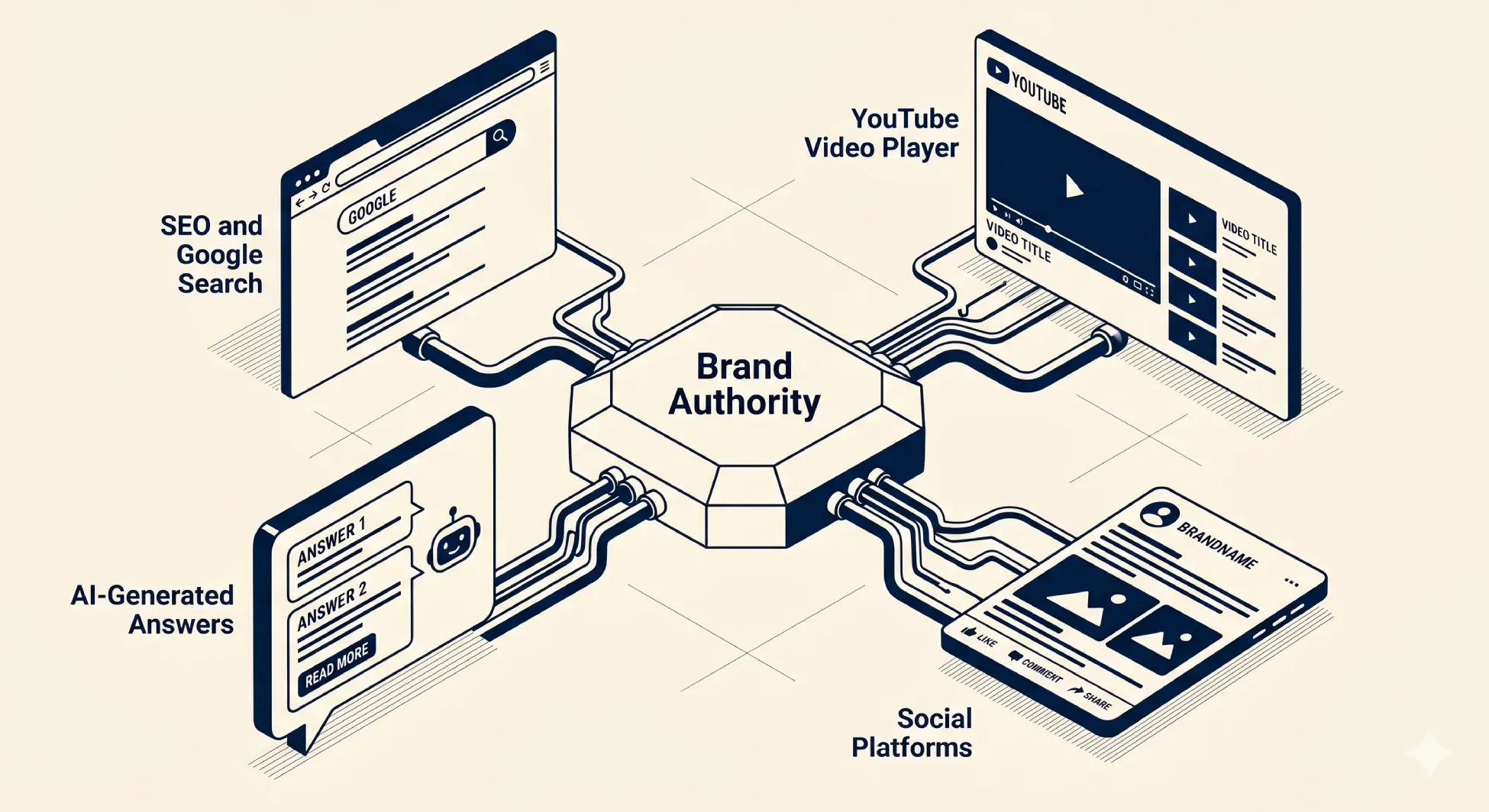
Think of it this way. SEO gets you found. AEO gets you quoted. GEO gets you recommended.
The most effective digital visibility strategy in 2025 integrates all three disciplines into one coherent system rather than treating them as separate workstreams.
The 7-Step GEO Framework for Businesses in India
Step 1: Build a Question-First Content Strategy
Every piece of content you create should begin with a real question your audience is asking. Not a keyword. A question.
What is the best way to generate leads for a B2B business in India? How do I choose a digital marketing agency in Mumbai? What does conversion rate optimization involve?
These are the queries people type into ChatGPT and Gemini. Your content must answer them directly, clearly, and comprehensively. If your existing content only targets short keyword phrases and does not address complete questions, it is structurally invisible to AI search platforms.
Map your content calendar around the top twenty to thirty questions your ideal customer asks at every stage of their journey. Then answer each one better than anyone else on the web has answered it.
Step 2: Establish Deep Topical Authority
AI platforms trust specialists, not generalists.
A brand that publishes ten comprehensive, well-researched articles on performance marketing in India is far more likely to be cited in an AI response about that topic than a brand with one generic service page that mentions performance marketing in passing.
Identify the three to five core topic areas your brand genuinely owns. Build a deep library of content within each topic. Cover the subject from multiple angles: definitions, comparisons, how-to guides, case studies, expert perspectives, and trend analyses. The depth and consistency of your coverage signals to AI models that your brand is a legitimate authority on the subject.
Step 3: Structure Every Page for AI Extraction
AI platforms are essentially very sophisticated content readers. They look for specific signals that tell them where the answer to a question lives within a piece of content.
Structure every important page and blog post with these principles in mind:
Answer the core question directly within the first two paragraphs Use clear, descriptive H2 and H3 subheadings that mirror the language of real questions Keep paragraphs short and focused on a single idea Use numbered lists for processes and bullet points for supporting details Include a definition-based section near the top for any key term or concept Add a comprehensive FAQ section at the end of every content piece
This structure makes it easy for AI platforms to extract, verify, and use your content when generating answers.
Step 4: Earn Brand Citations Beyond Your Own Website
Your website alone is not enough to build AI search visibility.
AI models are trained on the entire web. They recognize brands that appear consistently across multiple credible, external sources. Guest articles in industry publications, podcast appearances, press mentions, expert quotes in news articles, and third-party reviews all create the kind of distributed brand footprint that signals credibility to AI models.
Build a deliberate strategy for earning external citations. Contribute expert perspectives to relevant industry conversations. Get your brand mentioned in contexts where AI models are likely to encounter it. The more your brand name appears in credible contexts across the web, the more familiar and trustworthy it becomes to AI systems.
Step 5: Implement Structured Data Across Your Website
Schema markup is the technical layer that helps AI platforms understand what your content is about, who created it, and why it should be considered authoritative.
Implement FAQPage schema on all FAQ sections. Use Article schema with proper author attribution on blog posts. Apply Organization schema on your homepage. Use HowTo schema for process-based content. These structured data signals help AI crawlers correctly categorize and evaluate your content, making it more likely to surface in AI-generated responses.
Step 6: Maintain Factual Accuracy and Source Transparency
AI platforms prioritize content they can verify.
Content that makes specific, factual claims with transparent sourcing is rated more highly than content that makes vague, unverifiable assertions. Where you reference data, statistics, or research, cite your sources clearly. Where you make claims based on experience, demonstrate that experience through specific examples and outcomes.
Factual accuracy is not just an ethical standard. It is a GEO ranking signal.
Step 7: Integrate GEO With Your Existing SEO and Content Strategy
This is the step most businesses miss.
GEO is not a replacement for SEO. It is an extension of it. Google's AI Overviews still pull primarily from content that ranks well in traditional organic search. The technical SEO foundations you have built, your domain authority, your backlink profile, your site speed, are all still directly relevant to your AI search visibility.
The brands that will dominate AI search over the next five years are not the ones that abandoned SEO for something new. They are the ones that built on their existing SEO strength and deliberately extended it into GEO disciplines at the right moment.
That moment is now.
What GEO Looks Like in Practice
To make this concrete, here is a simplified example of how a GEO-optimized content strategy differs from a traditional SEO approach.
A traditional SEO approach for a digital marketing agency might target the keyword "digital marketing services Mumbai" with a service page optimized for that phrase, a few backlinks pointing to it, and a meta description promising results.
A GEO-optimized approach for the same agency would include a comprehensive pillar article answering "What should I look for in a digital marketing agency in India?", a series of supporting articles covering every related question in depth, structured data marking up the FAQ sections on every page, author bios establishing the credentials of the people creating the content, external citations from industry publications referencing the agency's expertise, and consistent publishing that builds topical depth across performance marketing, SEO, content strategy, and web development over months and years.
The second approach earns Google rankings and AI citations. The first approach earns only rankings, and increasingly not even those.
How Futuready Media Helps Brands Build GEO Visibility
At Futuready Media, GEO is not a future consideration. It is a current service we are building for brands across India right now.
Our approach combines question-first content architecture, topical authority mapping, structured data implementation, brand citation strategy, and deep integration with the technical SEO foundations that remain the bedrock of all digital visibility.
We understand that most businesses in India are still early in their awareness of GEO, which means the brands that move now are building authority in a space where competition is still genuinely low. That window will not stay open indefinitely.
Explore our full range of digital marketing services to understand how GEO fits into a complete, integrated growth strategy for your brand.
Quick Takeaway
Generative Engine Optimization is the practice of ensuring your brand gets cited, referenced, and recommended by AI platforms when they generate answers to questions your audience is asking. It builds on strong SEO foundations and extends them into the emerging landscape of AI-powered search. The businesses that start building GEO authority today will have a compounding advantage that competitors who wait simply cannot close.
Conclusion
GEO is not a trend to watch from a distance. It is a discipline to build into your digital strategy right now while competition is still relatively low and the opportunity to establish authority is genuinely available.
The brands that will dominate AI search results in the next three to five years are already creating the content, building the authority, and earning the citations that AI platforms use to decide who gets cited in their answers.
The question is not whether GEO will matter to your business. It already does. The question is whether you will start building for it before or after your competitors do.
If you want to be among the first businesses in your category to build genuine AI search visibility, talk to our team and let us build the right GEO strategy for your brand.
Commonly asked.
Honestly answered.
Generative Engine Optimization is the practice of optimizing your brand's content, authority, and digital presence so that AI-powered platforms like ChatGPT, Gemini, Google AI Overviews, and Perplexity are more likely to reference or recommend your brand when generating answers to user queries. It extends the principles of traditional SEO into the emerging landscape of AI-powered search.
Traditional SEO focuses on ranking your website pages in Google's list of search results. GEO focuses on getting your brand included in the AI-generated answer itself, before a user ever clicks a link. SEO gets you found in a list. GEO gets you cited in the answer. Both are necessary in 2025 and beyond, and the strongest digital visibility strategies integrate them together.
GEO applies to any AI-powered platform that generates synthesized answers from web content. This includes ChatGPT Search, Google AI Overviews, Gemini, Perplexity, Microsoft Copilot, and any other generative AI platform that surfaces brand and content references in its responses. As AI search adoption grows, the number of relevant platforms will continue to expand.
No. GEO builds on top of SEO, it does not replace it. Google's AI Overviews still pull primarily from content that ranks well in traditional organic search. Strong technical SEO, quality backlinks, and on-page optimization remain the foundation of both traditional and AI-powered search visibility. GEO adds a new layer of optimization on top of that existing foundation.
GEO is a medium to long-term strategy. AI platforms recognize and cite brands that have demonstrated consistent expertise over time, not brands that published a few optimized articles last week. Most brands begin seeing meaningful GEO visibility within three to six months of consistent, well-structured content publishing combined with active brand citation building. The earlier you start, the stronger your compounding advantage becomes.
Content that performs best for GEO is directly question-answering, clearly structured with logical subheadings and short paragraphs, factually accurate with transparent sourcing, comprehensive in its topical depth, and supported by schema markup. Definition-based sections, numbered process guides, comparison articles, and well-written FAQ sections are particularly effective formats for earning AI citations.
Absolutely, and in fact small and medium businesses in India have a genuine first-mover advantage right now. GEO competition in most Indian industry verticals is still relatively low. A business that builds topical authority and structured content over the next six to twelve months can establish AI search visibility in its category before larger competitors recognize the opportunity and start investing in it seriously.