Case Study: How Sapana Mats Built Global SEO Authority from a Niche Manufacturing Website
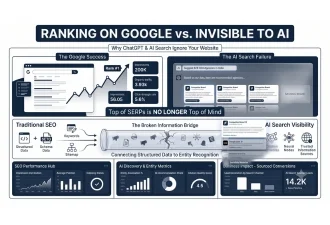
There is a version of this story that plays out in manufacturing businesses across India every year. A company with decades of experience, internationally recognised clients, real export credentials, and a product that genuinely competes at the highest global level. And yet when a wholesale buyer in Germany or a retail chain procurement head in Australia searches for a supplier, the company does not appear.
Not because the product is inferior. Because the digital presence was never built for discoverability.
Sapana Mats is one of India's most established polypropylene mat manufacturers and exporters. Founded in 1984 and operating across three manufacturing facilities in Aurangabad and Indore, the company has supplied to retail giants including IKEA, Home Depot, Lowe's, Crate and Barrel, and Urban Outfitters. Their products reach over 25 countries. They hold seven internationally recognised certifications including OEKO-TEX Standard 100, Global Recycled Standard, and SMETA. They have won the PLEXCONCIL award for Top Mat Exporter consistently for 17 years.
None of that heritage was visible when a global buyer searched for what Sapana actually makes. That is the problem Futuready was brought in to solve. Our SEO, AEO and GEO service is specifically built for businesses like Sapana, where the credibility already exists but the digital infrastructure to communicate it to the right audience does not.
The Starting Point: A World Class Manufacturer with a Catalogue Website
When Futuready first assessed the Sapana Mats digital presence, the website was functioning as a brochure. There was product information, a contact form, and some basic company details. It was clean and professional. But it was built for someone who already knew the brand, not for someone who was discovering it for the first time through a search query.
From an SEO standpoint, the challenges were significant and interconnected.
The website had no blog or content section producing organic search traffic. There were no pages targeting the specific commercial keywords that global wholesale buyers use when searching for a polypropylene mat supplier. The certifications and compliance credentials that are absolute prerequisites for EU and Australian retail chains to even consider a supplier were buried in a single page with minimal content explaining their significance to a buyer who may not know what OEKO-TEX or BSCI actually mean for their procurement process.
The global reach of the business, 25-plus countries served, partnerships with some of the world's largest retail chains, 40 years of export history, was not being communicated in a way that search engines could index or that AI tools could cite.
Perhaps most critically, the website was not structured to answer the questions a serious wholesale buyer was actually asking when evaluating a new supplier. Questions about minimum order quantities, customisation capabilities, lead times, certification documentation, recycled content verification, and manufacturing standards. These were questions with answers that existed inside the business but were not present on the website in a searchable, indexable, authoritative format.
The Strategy: Building Authority Around the Buyer's Research Journey
The SEO and content strategy Futuready built for Sapana Mats was grounded in a single insight. The buyer of polypropylene mats at a global retail chain or wholesale operation does not search the way a consumer does. They search with procurement intent. They are evaluating suppliers, not browsing products.
That shift in how the audience searches required a completely different content architecture than what most B2C product websites use.
The first layer of the strategy was a full website restructure built around buyer journey stages. The homepage needed to communicate the brand's global scale and credibility within the first few seconds of a visit. The capabilities and certifications pages needed to be expanded into genuinely authoritative resources that answered compliance questions directly, not just listed logos. The collections section needed descriptive, keyword-rich content that connected product specifications to the search terms buyers actually use.
The second layer was a content programme targeting the long-tail commercial keywords that serious buyers use in the research phase. Topics like recycled mat sourcing from India, OEKO-TEX certification for outdoor mats, bulk polypropylene mat suppliers for European retail, customisation capabilities for private label mat buyers, and the supply chain credentials that distinguish a serious exporter from a commodity middleman.
These were not topics a consumer would search for. They were exactly what a procurement head at a European retail chain, a sustainability director at a home goods brand, or an independent importer building a product catalogue would type into Google or ask an AI tool.
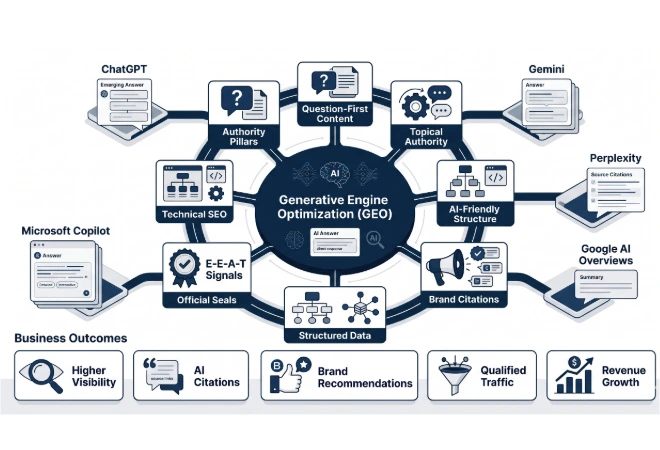
The third layer was structured data implementation across the entire website. Schema markup for the organisation, products, FAQ sections, and certification pages. This served a dual purpose. It helped Google understand the context and credibility of the content. And it positioned the website to be cited by AI search tools, which in 2026 are a primary research channel for B2B buyers across Europe and North America.
The Content Execution: Turning Expertise into Searchable Authority
The content production programme began with a detailed keyword and topic audit covering every stage of the buyer journey for a wholesale mat buyer.
From that audit, a content calendar was built targeting three distinct buyer types. The first was the sustainability-focused importer looking for verified recycled content credentials and ethical trade documentation. The second was the product developer at a retail chain looking for customisation capability, lead time reliability, and a supplier with the design range to meet shifting consumer trends. The third was the procurement manager evaluating Indian suppliers against competing sourcing regions including China, Turkey, and Bangladesh.
Each buyer type had a distinct set of search queries, concerns, and decision criteria. The content strategy was designed to meet all three at the specific moment they were searching for answers.
For the sustainability buyer, content was built around GRS certification, recycled polypropylene mat manufacturing, and the supply chain transparency that international retail compliance requires. For the product developer, content covered customisation capabilities, the Pantone-matched colour range, design exclusivity options, and the breadth of the mat collections. For the procurement manager, content addressed why Indian manufacturers consistently outperform competing sourcing regions on combination of quality, price, customisation depth, and ethical trade compliance.
The FAQ pages across the website were expanded significantly, with direct, answer-formatted responses to the specific questions buyers ask before placing a first order. This was both a buyer experience improvement and an AEO move. Direct answers in a structured FAQ format are exactly the type of content that gets cited in Google AI Overviews and ChatGPT responses when a buyer asks a sourcing question.
Our content marketing approach for Sapana Mats treated every piece of content as both an SEO asset and a buyer education tool. The two objectives are not in tension when the content is built around real buyer questions rather than keyword density.
The Technical Foundation: Making the Website Readable for Both Humans and Search Systems
Alongside the content programme, a full technical SEO audit was conducted to identify and fix the structural issues preventing the website from ranking for competitive commercial terms.
Page speed was addressed across both desktop and mobile, with particular attention to mobile performance given that a significant share of B2B research in growth markets happens on mobile devices. Core Web Vitals improvements were implemented through image optimisation, lazy loading, and script management.
The internal linking structure was rebuilt to create logical content clusters. Blog posts linking to relevant certification pages. Capability pages linking to specific collection categories. FAQ answers pointing to the contact page for sourcing enquiries. The architecture was designed so that a buyer arriving at any page in the website could navigate naturally through the content most relevant to their purchasing stage without dead ends or disconnected pages.
Schema markup was implemented site-wide. Organisation schema with accurate business information, location data, and certification references. Product schema across the collections pages. FAQ schema on every page with a question-and-answer section. Article schema on every blog post. This technical layer is what enables AI search tools to understand the brand's credibility and cite it in generated responses rather than defaulting to a competitor whose content is more explicitly structured.
The sitemap was rebuilt and resubmitted to Google Search Console after the new content architecture was in place. Redirect management was handled cleanly to preserve any existing link equity from older pages. And canonical tags were implemented across the product and collection pages to prevent any indexation of duplicate or near-duplicate content.
This is the kind of infrastructure work that rarely gets celebrated but consistently delivers the most durable search ranking improvements. Our blog on why competitors are winning because they are structured better covers the broader principle at play here. Structure is the competitive advantage most businesses overlook entirely.
What the Sapana Mats Engagement Demonstrates About B2B SEO
The Sapana Mats engagement is instructive for any manufacturer or exporter that believes their industry is too niche for content marketing and SEO to deliver meaningful results.
The lesson is the opposite of what most niche businesses assume. The narrower and more specific the industry, the higher the potential return from targeting commercial-intent keywords precisely. A polypropylene mat manufacturer faces far less content competition on the specific terms that global wholesale buyers use than a generalist e-commerce brand faces on broad consumer product keywords. The barrier to ranking for "recycled PP mat exporter India OEKO-TEX certified" is dramatically lower than ranking for "buy outdoor mat."
The buyer arriving on that specific query is not browsing. They are sourcing. The conversion intent is high. The willingness to engage with detailed, authoritative content is high. And the value of a single converted wholesale buyer relationship, measured in annual order volume rather than a single retail transaction, is exponentially higher than any consumer conversion.
This is the fundamental commercial case for B2B content marketing. The audience is smaller. The queries are more specific. But the value of each successful conversion is orders of magnitude larger. And the brands that have built genuine search authority in their niche are extraordinarily difficult to displace because the combination of topical authority, certification credibility, and structured content depth takes years to replicate.
What Futuready built for Sapana Mats was not a content calendar. It was a digital buyer acquisition system designed around how serious wholesale buyers actually research, evaluate, and select suppliers in 2026. You can read more about how this kind of structured approach works across industries in our blog on building a self-growing content ecosystem.
What This Means for Your Business
If you are running a manufacturing, export, or B2B service business in India and your digital presence is not reflecting the quality, scale, or credibility of what you actually do, the gap is almost certainly not a product problem. It is a content and SEO infrastructure problem.
The buyers who need what you offer are searching for it. The question is whether they find you or find a competitor who invested earlier in being findable.
The digital strategy that worked for Sapana Mats, building a content architecture around buyer intent, implementing technical SEO that makes every page credible and indexable, and structuring content to be cited by AI search tools, applies directly to any business operating in a niche B2B or export category.
The time to build that infrastructure is before your category gets competitive. Not after.
Commonly asked.
Honestly answered.
Yes, and niche manufacturing businesses often have a structural advantage in SEO over broader consumer brands. The specific commercial keywords that wholesale buyers and procurement managers use when sourcing suppliers have significantly lower competition than consumer product keywords. A manufacturer with strong topical authority in their specific category can rank for high-intent buyer queries faster and more durably than a generalist brand competing for mass consumer traffic.
Content that directly answers the questions a buyer asks during their evaluation process. This includes certification and compliance documentation, customisation capability descriptions, minimum order and lead time information, supply chain transparency content, and category expertise demonstrated through detailed guides covering topics like material sourcing, quality standards, and export logistics. The goal is not to educate broadly but to answer specifically what a buyer needs to know before initiating a sourcing conversation.
For niche B2B manufacturers with low existing domain authority, the first measurable improvements in keyword rankings typically appear within three to four months of consistent technical SEO and content work. Significant organic traffic increases from target buyer keywords usually develop between six and twelve months. Compounding authority that makes every new piece of content rank faster builds over a twelve to twenty-four month window of consistent investment.
Certifications serve two functions in a B2B manufacturer's SEO strategy. First, they are a direct ranking signal when content explains what each certification covers and why it matters for a buyer's compliance requirements. Second, they are a trust signal that converts high-intent search traffic into sourcing enquiries. A buyer who arrives on a certification page and finds detailed, accurate, buyer-oriented explanations of compliance documentation is far more likely to initiate contact than a buyer who sees a logos page with no supporting context.
B2C SEO optimises for high-volume consumer keywords with shorter purchase cycles and lower transaction values. B2B manufacturer SEO optimises for lower-volume, high-specificity commercial keywords where each conversion represents a long-term wholesale relationship with significantly higher lifetime value. The content depth, keyword targeting, and conversion expectations are fundamentally different. B2B manufacturer SEO requires patience because the keywords are less searched but the business outcome of ranking for them is disproportionately valuable.
AI tools are increasingly being used by procurement professionals to shortlist suppliers before visiting individual websites. A manufacturer whose certifications, capabilities, and export credentials are structured in a way that AI tools can read and cite will appear in generated sourcing recommendations. A manufacturer whose information is buried in PDFs, unstructured text, or absent from the website entirely will be invisible to these tools regardless of their actual credibility. Implementing AEO and GEO practices alongside traditional SEO is now essential for manufacturers targeting internationally sourced wholesale buyers.