Healthcare Marketing in India: How Hospitals Can Generate Qualified Patient Leads Online
A 52-year-old man in Pune wakes up with chest discomfort. He does not call a doctor immediately. He picks up his phone and types "best cardiologist in Pune" into Google. He scrolls through the results, reads a few reviews, checks a hospital website, watches a short doctor introduction video, and within eight minutes he has made a decision. He books an appointment with the hospital whose online presence made him feel safe enough to take that step.
He never called the second hospital he found. Their website looked outdated. There were no doctor profiles. The only phone number listed did not connect.
This is healthcare marketing in India in 2026. The patient journey begins online, often in a moment of anxiety or urgency, and the hospital that has built the most trustworthy, informative, and accessible digital presence wins that patient. Not necessarily the hospital with the best doctors or the most modern equipment. The one that felt trustworthy in those eight minutes of research.
Most hospitals in India have not built for those eight minutes. And that is exactly where patient acquisition is being lost every single day. Working with a full service digital marketing agency that understands how healthcare buyers make decisions is the starting point for changing that outcome.
The Problem Most Hospital Marketing Teams Do Not Talk About
Walk into the marketing department of most mid-sized hospitals in India and you will find the same situation. There is a website. There are social media handles. There are ads running on Google and Meta. There is a WhatsApp number somewhere in the footer. And yet the inquiry volume from digital channels is either disappointingly low or frustratingly inconsistent.
The marketing team measures impressions and followers. The management measures bed occupancy and OPD numbers. Nobody is measuring the gap between them.
That gap is the patient journey. It is what happens between a person experiencing a health concern and that same person arriving at your registration desk. For most hospitals, that journey is broken in multiple places simultaneously. The website does not rank for the specific symptoms and conditions their patients search for. The ads attract clicks but send people to a generic homepage rather than a condition-specific landing page. The social content posts about hospital milestones and World Health Day but never addresses the actual questions a potential patient is silently asking at 11 pm when they cannot sleep because something feels wrong.
Healthcare marketing is not like marketing a product. It is not even like marketing a generic service. It is marketing in the context of fear, vulnerability, and high-stakes decision making. The person searching for a hospital is not browsing. They are deciding who to trust with something that matters enormously. Every element of the digital experience either builds that trust or destroys it.
Chapter One: The Patient Is Already Searching. The Question Is Whether They Find You.
Before a patient picks up a phone or walks through a door, they search. This is not a metropolitan behaviour anymore. It happens in Tier 2 cities. It happens in smaller towns. It happens across every income bracket that has a smartphone.
The searches are specific. Nobody types "hospital" into Google. They type "orthopaedic surgeon for knee replacement Nagpur," "best IVF clinic in Hyderabad," "symptoms of appendicitis when to see doctor," "diabetologist near me open Sunday." These are precise, intent-driven queries from people who are already in a decision mindset.
The hospitals that appear at the top of these searches are not necessarily the largest or the best funded. They are the ones that have invested in building search authority around the specific conditions, specialties, and geographies they serve.
This is the foundation of hospital SEO. Not just ranking for the hospital's name or for broad terms like "multispecialty hospital Mumbai." But building a content and page architecture that captures the exact queries a patient in distress or a caregiver under pressure is typing at the exact moment they are most ready to take action.
A well-built SEO and AEO strategy for a hospital covers three layers simultaneously. Specialty pages that rank for procedure and condition keywords. Location pages that capture patients searching geographically. And educational content that answers the symptom and treatment questions patients are asking before they are even ready to name a hospital, pulling them into the brand's orbit early in their research journey.
Chapter Two: The Trust Problem That No Ad Budget Can Solve
Here is something every hospital marketing head needs to understand. A patient choosing a hospital is not making a commercial decision. They are making an emotional one. They are asking themselves one question above all others: "Can I trust these people with my health, or the health of someone I love?"
No amount of ad spend can manufacture that trust. It has to be built through evidence. And in 2026, the evidence patients look for is almost entirely digital.
Doctor profiles are the first piece of evidence. Not a generic name and qualification line. A genuine profile with a photograph, a summary of the doctor's clinical focus written in plain language, years of experience, and ideally a short video or quote that gives the person a sense of who they will be sitting across from. Hospitals that invest in rich, humanising doctor profiles consistently see higher conversion rates from website visits to appointment bookings because the patient feels like they already know the doctor before the first consultation.
Patient stories are the second piece of evidence. Not fabricated testimonials. Real outcomes described in language that resonates with someone going through the same thing. "I was terrified before my cardiac procedure. The team explained everything so clearly that I felt prepared" lands very differently than "excellent service, highly recommended." Specificity creates trust. Generic praise creates nothing.
Transparent information is the third piece of evidence. Procedure explanations written in plain language. What to expect before, during, and after a treatment. How long the recovery will be. These are the questions patients are desperate to find answers to. Hospitals that provide them build authority. Hospitals that hide behind medical jargon leave patients to find their answers on a competitor's website.
Content marketing in healthcare is fundamentally a trust-building exercise. Every article, every FAQ, every video is an opportunity to demonstrate competence, warmth, and transparency before the patient has even made contact.
Chapter Three: Paid Media in Healthcare Is High Stakes and Mostly Wasted
Healthcare is one of the highest-cost verticals in paid digital advertising. Clicks are expensive. Competition is intense. And the conversion rates that most hospitals accept as normal would be considered catastrophic in other industries.
The reason paid media underperforms for most hospitals is the same reason it underperforms in any industry. The ad gets the click but the landing page loses the patient.
A potential patient clicks on a Google ad for "laparoscopic surgery in Chennai." The ad is well written. The targeting is correct. And then they land on the hospital's homepage. The homepage talks about the hospital's 30 years of legacy, its number of beds, and its accreditations. There is no specific mention of laparoscopic surgery. There is no clear next step. There is a generic contact form at the bottom that asks for twelve pieces of information before doing anything.
The patient closes the tab and clicks the next result.
The fix is not a bigger budget. The fix is condition-specific landing pages built for the intent of the patient who clicked. A laparoscopic surgery landing page should explain the procedure in plain language, introduce the surgeon who performs it, address the most common patient concerns directly, show two or three patient outcomes, and provide one very clear, very low-friction call to action. "Book a free consultation" rather than "enquire now." "Speak to a specialist today" rather than "contact us."
The performance marketing discipline of building the ad and the landing page as a single coherent experience is directly applicable to healthcare. The patient clicked because the ad promised something specific. The page must deliver that specific promise immediately. Every degree of mismatch between the two costs appointments.
Chapter Four: Social Media Is Where Trust Is Built Between Searches
A patient who is considering a hospital for an elective procedure, a planned surgery, or a specialist consultation does not decide in one search session. They research over days or even weeks. They come back to the same hospital's name multiple times across different platforms before making contact.
Social media is where the brand exists between those search sessions. It is the channel that answers the question "is this a hospital I can trust" without the patient actively asking it.
The hospitals that use social media effectively in India are not the ones posting about hospital anniversaries and national health days. They are the ones publishing content that a potential patient or their family member would actually find useful, reassuring, or informative. A cardiologist explaining in plain Hindi and English what a stress test involves. A physiotherapist demonstrating three exercises safe for post-surgery recovery. A gynaecologist addressing the questions women are too embarrassed to ask in a consultation. These pieces of content do not feel like marketing. They feel like a hospital that genuinely cares about the people it serves. That perception is the entire objective.
Alongside organic social content, video is the most powerful trust-building format available to hospitals in India in 2026. A two-minute video of a doctor talking directly to camera about what a patient can expect from a specific procedure does more for appointment conversion than any display ad. It is personal. It is human. It reduces the fear of the unknown that is often the single biggest barrier between a patient who intends to book and a patient who actually does.
Video production for healthcare needs to be warm, clear, and patient-centred. The patient watching is anxious. The video's job is to reduce that anxiety with genuine information delivered by a real doctor in a way that makes the viewer feel seen and understood.
Chapter Five: The Website Is Either an Appointment Machine or a Missed Opportunity
Everything discussed so far, SEO, paid media, social content, video, leads back to one place. The website.
The hospital website is where the patient's entire research journey either converts into an action or ends without one. And the vast majority of hospital websites in India are built to present the hospital rather than to serve the patient.
There are several specific conversion failures that appear consistently across hospital websites.
The first is the absence of a clear primary conversion action on every key page. A patient landing on a neurology department page should not have to hunt for a way to book an appointment with a neurologist. The path from information to action should take one click, not three.
The second is page speed. Healthcare searches happen on mobile devices in moments of urgency. A hospital website that takes five seconds to load on a 4G connection is losing patients before they have read a single word. This is both a conversion problem and an SEO problem since Google's Core Web Vitals directly affect search rankings.
The third is the absence of local SEO infrastructure. For a hospital serving specific neighbourhoods, districts, or cities, Google Business Profile optimisation is often more valuable than any other single digital investment. A fully optimised GBP with accurate service listings, specialist names, real patient reviews, and regularly updated photos drives more patient volume from local searches than most hospitals realise, at close to zero ongoing cost.
The fourth is the complete absence of content addressing patient fear. Hospitals write about their facilities and their technology. Almost none of them write about what it feels like to be a patient, what to expect, what to ask the doctor, how to prepare. Patients searching for this content find it on generic health portals because the hospital they are already considering has not provided it. That is an enormous missed opportunity to deepen the relationship before the appointment even happens.
Our blog on why websites get traffic but do not convert covers the broader conversion architecture principles that apply directly to hospital websites. Every funnel leak described there exists in healthcare, often in a more expensive form because the cost of a lost patient appointment is far higher than the cost of a lost product sale.
Chapter Six: The Digital Marketing Strategy That Actually Works for Hospitals
After everything above, the framework that actually generates consistent qualified patient leads for hospitals in India has five connected parts.
The first part is specialty-led SEO. Build dedicated pages for every specialty and major procedure. Optimise for condition keywords, symptom queries, and geographically modified searches. Implement FAQ schema so AI tools and featured snippets surface your content when patients ask specific health questions.
The second part is content that answers patient questions at every stage of their journey. From early symptom research through to post-procedure recovery. This content builds organic traffic, earns backlinks from health portals, and positions the hospital as the most trustworthy source of information in its specialty areas.
The third part is condition-specific paid campaigns with dedicated landing pages. Not ads pointing to the homepage. Ads pointing to pages built specifically for the patient who clicked, with the relevant doctor, relevant procedure information, relevant patient outcomes, and a frictionless conversion action.
The fourth part is social and video content that humanises the clinical team and reduces patient anxiety. Consistent, warm, plain-language content that makes the hospital feel approachable rather than institutional.
The fifth part is a website experience that converts the trust built across all four other channels into booked appointments. Fast loading, mobile-first, with clear conversion paths on every specialty and doctor page, prominent trust signals, and a call to action that makes it easier to book than to keep researching.
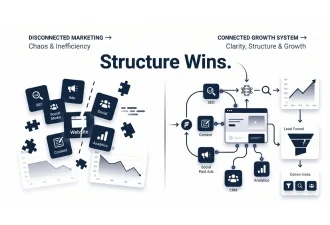
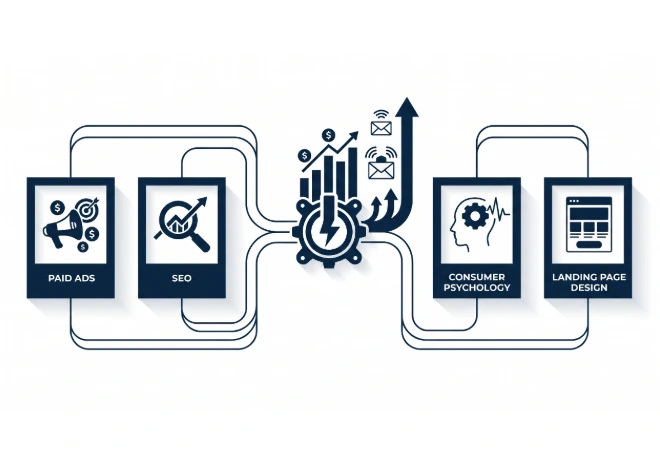
These five parts are not independent. They feed each other. The SEO content gives paid campaigns validated messaging. The paid campaigns drive traffic back to website pages that the social content has already made familiar. The video content increases the conversion rate of landing pages. The trust built through content reduces the cost per lead from paid channels. Our blog on how digital touchpoints map to revenue covers exactly this interconnected journey in detail.
Healthcare is not a vertical where digital marketing is optional anymore. It is the primary channel through which a growing majority of Indian patients make their most important healthcare decisions. The hospitals that build a connected, patient-centred digital strategy now are building a patient acquisition advantage that will be very difficult for competitors to close in the years ahead.
Commonly asked.
Honestly answered.
Healthcare marketing is the use of digital and offline strategies to connect hospitals with patients who need their services. In India, where smartphone penetration now reaches smaller towns and Tier 2 cities, the majority of patient journeys begin with an online search. A hospital without a digital marketing strategy is invisible to patients in the exact moment they are making a decision. Healthcare marketing matters because it determines whether that patient finds you or finds a competitor.
By building SEO-optimised pages for every major specialty, procedure, and condition treated at the hospital. These pages need to be written in plain language that matches how patients actually search, include FAQ sections answering the questions patients most commonly ask, implement schema markup so search engines and AI tools can surface the content in direct answers, and link clearly to appointment booking. Local SEO through Google Business Profile optimisation is equally critical for capturing geographically specific patient searches.
Almost always because the ad sends patients to a generic homepage rather than a condition-specific landing page. A patient who clicked an ad for knee replacement surgery needs to land on a page specifically about knee replacement, with the relevant surgeon, procedure information, patient outcomes, and a clear booking call to action. The mismatch between ad promise and landing page experience is the single biggest cause of wasted healthcare advertising spend in India.
Content that answers the specific questions patients ask during their health research journey. This includes plain-language explanations of procedures and conditions, what to expect before, during, and after treatment, how to prepare for a specific surgery, recovery timelines, when symptoms warrant an urgent consultation, and doctor-authored educational pieces in the hospital's specialty areas. This content builds organic search authority, earns patient trust before first contact, and positions the hospital as the most credible source in its category.
Social media does not typically drive direct appointment bookings at scale, but it plays a critical role in the patient's trust-building journey between search sessions. A patient researching a hospital over several days will encounter the social presence and form an impression. Hospitals that consistently publish warm, informative, doctor-led content on social platforms build significantly more patient trust than those that post only institutional announcements. Video content from doctors is the highest-impact social format for healthcare brands in India.
Google Business Profile is often the most valuable and most underutilised asset in a hospital's digital marketing strategy. A fully optimised GBP with accurate specialty listings, individual doctor names, real patient reviews, updated photos, and consistent NAP data drives significant local search visibility at very low ongoing cost. For hospitals serving specific cities or neighbourhoods, appearing prominently in Google's local pack for relevant healthcare searches can generate more patient inquiries than any paid campaign.
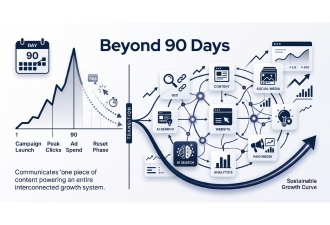
A well-executed paid media strategy targeting condition-specific landing pages can generate measurable patient inquiries within the first month. SEO and content strategies take longer, typically three to six months before significant organic traffic begins and six to twelve months before ranking authority develops for competitive specialty keywords. The most durable patient acquisition systems combine both: paid media for immediate volume and organic content for compounding, lower-cost patient acquisition over time.