Why Scaling Ads Without Fixing Your Website Is a Loss-Making Strategy
More ad spend does not automatically mean more revenue.
This is one of the most expensive lessons businesses in India learn the hard way. They increase their Google Ads budget. They push more on Meta. Clicks go up. Traffic increases. And yet the leads and sales barely move.
The problem is almost never the ads.
It is the website they are sending all that traffic to.
Scaling ads without first fixing your website is not a growth strategy. It is a loss-making one. And understanding why is the first step toward fixing it.
The Core Problem: You Are Paying for Traffic That Cannot Convert
Every time someone clicks your ad, you pay. That click has a cost whether the visitor buys, enquires, or leaves within five seconds.
Most businesses obsess over their ad creative, targeting, and bidding strategies. Very few ask the more important question: what happens after the click?
If your website is slow, confusing, or unconvincing, no amount of ad spend will save you. You are essentially pouring water into a bucket full of holes and wondering why it never fills up.
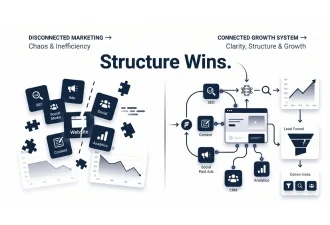
This is where Performance Marketing and website optimization must work as one connected system rather than two separate responsibilities.
What Is Conversion Rate Optimization and Why Does It Matter?
Conversion Rate Optimization, commonly known as CRO, is the process of improving your website so that a higher percentage of your existing visitors take the action you want, whether that is filling a form, making a purchase, or calling your team.
Even a small improvement in conversion rate has a dramatic impact on your returns.
Here is a simple example:
- 1000 visitors per day at a 1% conversion rate gives you 10 leads
- The same 1000 visitors at a 3% conversion rate gives you 30 leads
- No extra ad spend. Three times the output.
That is the power of fixing your website before scaling your ads.
5 Website Problems That Are Silently Draining Your Ad Budget
1. Slow Page Load Speed
If your landing page takes more than three seconds to load, a significant portion of your paid traffic leaves before seeing a single word of your offer. You have already paid for that click. You have received nothing in return.
Page speed is not just a technical issue. It is a revenue issue.
2. Poor Mobile Experience
The majority of ad traffic in India comes from mobile devices. If your website is not built and optimized for mobile users, you are losing conversions every single hour of every single day.
Buttons that are too small, text that is hard to read, and forms that are difficult to fill on a phone are silent conversion killers.
A professionally built website through expert development ensures your mobile experience matches the quality of your ad campaigns.
3. Weak or Unclear Call to Action
Your visitor landed on your page. Now what?
If your call to action is buried, generic, or unconvincing, most visitors will simply leave. Every landing page needs one clear, compelling action that tells the visitor exactly what to do next and why they should do it now.
4. Messaging Mismatch Between Ad and Landing Page
This is one of the most overlooked conversion killers. A user clicks an ad promising a specific offer or solution. They land on a generic homepage that says nothing about that offer.
The disconnect destroys trust instantly. The visitor feels misled and leaves.
Your ad message and your landing page message must be perfectly aligned. This consistency is what keeps visitors engaged long enough to convert.
5. No Trust Signals on the Page
Would you hand over your contact details or money to a website that has no reviews, no client logos, no credentials, and no clear contact information?
Neither would your visitors.
Trust signals like testimonials, case studies, client logos, certifications, and clear contact details dramatically improve conversion rates, especially for first-time visitors arriving from paid ads.
How Analytics Connects the Dots Between Ads and Website Performance
Running paid ads without proper analytics is like operating in complete darkness. You spend money, you see some results, but you have no idea what is actually working or where the breakdown is happening.
A properly configured analytics setup tells you:
- Which ads are driving quality traffic versus just cheap clicks
- Which landing pages have the highest bounce rates
- At exactly which step users are dropping out of your conversion funnel
- Which audience segments convert at the highest rate
This data is what transforms guesswork into a precise, scalable strategy. Without it, every decision is a gamble.
A well-structured digital strategy ensures your analytics framework is built to track the right metrics before a single rupee is spent on ads.
The Right Order of Operations
Most businesses get this sequence completely backwards. They scale first and optimize later. By the time they realize the website is the problem, they have already wasted a significant budget.
The correct order looks like this:
- Audit your website for speed, mobile experience, and conversion readiness
- Fix critical issues before increasing ad spend
- Set up end-to-end analytics tracking across ads and website
- Launch or scale paid campaigns to your optimized pages
- Use data to continuously improve both the ads and the website together
- Scale confidently knowing every additional rupee has a stronger chance of returning revenue
This is not a slow approach. It is actually the fastest path to sustainable growth.
Quick Takeaway
Doubling your ad budget on a broken website doubles your losses, not your revenue. Fix the foundation first. A well-optimized website with proper analytics in place will consistently outperform a big ad budget pointed at a poor user experience.
Conclusion
Scaling ads is not a bad idea. Scaling ads without fixing your website is.
The most successful performance marketing campaigns in India are built on a simple truth: great ads bring people to the door, but a great website is what gets them inside and keeps them there long enough to say yes.
Performance Marketing, Website CRO, and Analytics are not three separate workstreams. They are three legs of the same stool. Remove one and the whole thing collapses.
If your ad spend is climbing but your conversions are not, the answer is almost certainly sitting on your website, waiting to be fixed.
Explore the full range of work we have done for brands that made this shift by visiting our client portfolio, or reach out to our team to start with a proper audit today.
Commonly asked.
Honestly answered.
Scaling ads without optimizing your website means you are paying for traffic that your website cannot convert. Every click costs money. If your landing page is slow, unclear, or unconvincing, that spend is wasted regardless of how good your ad targeting is.
Conversion Rate Optimization is the process of improving your website so more visitors take a desired action. Even a small improvement in conversion rate means you get significantly more leads or sales from the same ad budget, dramatically improving your overall ROI.
A slow landing page causes a large percentage of paid visitors to leave before the page even loads. Since you have already paid for those clicks, slow page speed directly increases your cost per conversion and reduces the return on your ad spend.
At a minimum you should have goal tracking, funnel visualization, landing page performance reports, traffic source segmentation, and event tracking for key user actions. This setup tells you exactly where visitors are dropping off so you can fix it before spending more on ads.
The most common issues include slow load speed, poor mobile experience, weak calls to action, messaging mismatch between ads and landing pages, and lack of trust signals like reviews, testimonials, and client credentials.
Run your key landing pages through speed testing tools, check them on multiple mobile devices, ensure your messaging matches your ad copy, confirm your forms and CTAs are working correctly, and verify that your analytics is tracking conversions accurately end to end.